
What's Happening?
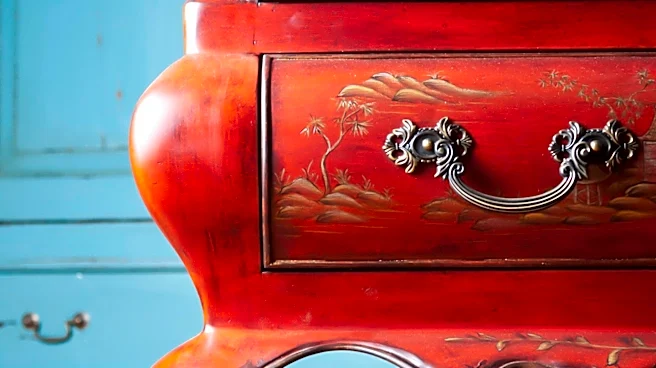
Antique furniture drawers, often marred by stains and wear from decades of use, are being revitalized using a simple yet effective paper lining technique. This method involves cutting decorative paper to fit the drawer bottom, adhering it with Mod Podge,
and then sealing it with a water-based Polycrylic for durability. This process effectively conceals imperfections like ink blotches and stains, transforming unsightly drawer interiors into aesthetically pleasing spaces. The technique is particularly useful for pieces like 100-year-old roll-top desks, where original drawers may have significant damage. The approach not only improves the appearance but also provides a wipeable surface, enhancing the functionality and longevity of the restored furniture.
Why It's Important?
The practice of lining antique furniture drawers holds significant importance for the preservation and aesthetic enhancement of vintage pieces in the U.S. It offers a practical solution for dealing with the common issue of stained or damaged drawer interiors, which can detract from the overall value and appeal of antique furniture. By making these pieces more presentable and functional, it encourages their continued use and appreciation, contributing to sustainable consumption by extending the lifespan of existing items. For antique dealers and restorers, this technique provides a cost-effective way to add value to their inventory, making items more attractive to buyers. It also empowers DIY enthusiasts to undertake their own restoration projects, fostering a sense of craftsmanship and personal connection to their home furnishings. This method helps maintain the historical integrity of the furniture while adapting it for modern use.
What's Next?
The popularity of this drawer lining technique is likely to grow, leading to an increased demand for specialized materials like heavy wrapping paper, Mod Podge, and Polycrylic suitable for furniture restoration. We can anticipate more online tutorials and workshops emerging to teach this skill, further democratizing furniture restoration. This trend may also influence the market for decorative papers, with manufacturers potentially offering designs specifically tailored for drawer lining. As more individuals adopt this method, it could contribute to a broader appreciation for antique and vintage furniture, encouraging more people to invest in and restore older pieces rather than opting for new, mass-produced items. This could also lead to a rise in custom design services for drawer lining, offering unique patterns and finishes.
Beyond the Headlines
Beyond its practical application, the act of lining antique furniture drawers touches upon deeper themes of heritage, craftsmanship, and the value of preservation. It represents a conscious effort to honor the history of an object while adapting it for contemporary living. This practice can evoke a sense of nostalgia and connection to the past, as each restored piece carries a story. Ethically, it promotes a sustainable approach to consumption, reducing waste and extending the life cycle of goods. Culturally, it reinforces the idea that beauty can be found in imperfection and that older items can be given new life through thoughtful intervention. This attention to detail in hidden spaces also reflects a broader appreciation for quality and the art of subtle enhancement, transforming a functional element into a delightful surprise.