






What's Happening?
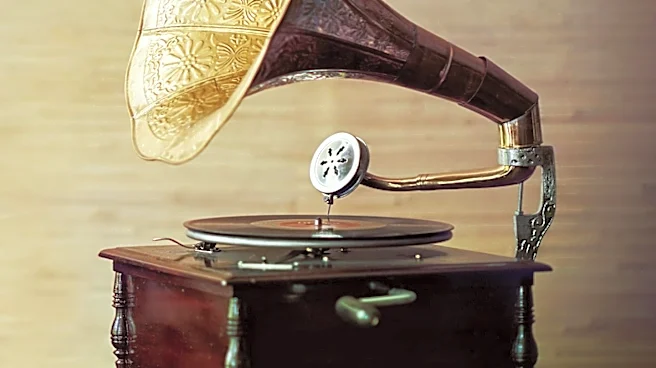
Tompkins Square has released 'New Orleans Joys: The Earliest Recordings, 1923–1926,' a 2CD collection showcasing the early artistic development of jazz pioneer Jelly Roll Morton. This compilation provides an in-depth look at Morton's formative years as a pianist,
composer, and bandleader before his widespread fame. The set includes recordings from various labels such as Paramount, Okeh, Autograph, Vocalion, and Gennett, capturing Morton in solo performances, with his own bands (including Jelly Roll Morton and His Orchestra, Morton’s Jazz Band), and in support of other artists like cornetist King Oliver and vocalist Edmonia Henderson. The accompanying booklet offers extensive scholarship, detailing Morton's contributions to jazz during this crucial period. These early recordings highlight his distinctive musical personality and the evolving sounds of jazz as it migrated northward from New Orleans to studios in Chicago and Richmond, Indiana.
Why It's Important?
This release is significant for jazz historians and enthusiasts as it offers a comprehensive look at the foundational work of one of jazz's most influential figures. While Morton's later RCA Victor recordings are widely recognized for solidifying his place in music history, 'New Orleans Joys' provides a crucial preamble, demonstrating his 'baseline brilliance and rapid-fire development' as both a performer and a composer. Understanding these early works helps to trace the evolution of jazz itself, showcasing the genre's roots in minstrel shows and vaudeville while also highlighting Morton's innovative solo expressiveness. The collection underscores Morton's role in establishing a major stylistic footprint in jazz, making it an invaluable resource for studying the genre's origins and the artistic growth of a key innovator.
Beyond the Headlines
The re-release of Jelly Roll Morton's early recordings transcends mere historical documentation; it offers a deeper understanding of the cultural and musical landscape of the early 20th century. Morton's journey from New Orleans to northern recording studios reflects broader demographic and cultural shifts in the United States, particularly the Great Migration and the spread of African American musical forms. His music, characterized by 'New Orleanian gusto,' incorporated diverse elements, including washboards, banjos, and kazoos, illustrating the eclectic influences that shaped early jazz. This collection also implicitly addresses the historical perception of Morton, who was sometimes dismissed as a braggart. By presenting his early work with scholarly context, the release encourages a re-evaluation of his legacy, emphasizing his undeniable musical genius and his profound impact on jazz, which continues to resonate a century later.