








What's Happening?
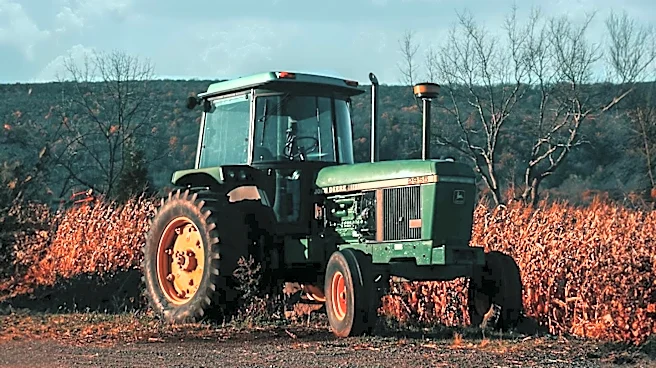
John Deere has reached a $99 million settlement in a class action lawsuit that alleged the company maintained a monopoly on repair services for its agricultural equipment. Farmers are currently being notified of their options under this agreement. The
lawsuit, filed in 2022, claimed John Deere engaged in anticompetitive behavior by withholding necessary repair tools from farmers and independent repair shops, thereby suppressing price competition for repair services. This settlement aims to address these issues, though John Deere stated it found no wrongdoing. The core of the dispute revolves around the proprietary software required to diagnose and repair John Deere agricultural equipment, which historically was only accessible to John Deere and its authorized dealers. A fairness hearing for the class action settlement is scheduled for January 19, 2027, in Rockford, Illinois. Separately, in July, the Federal Trade Commission (FTC) also settled with John Deere over similar concerns, with the FTC's agreement requiring John Deere to make repair resources available to equipment owners and independent repair providers on fair and reasonable terms.
Why It's Important?
This settlement is significant for the 'right to repair' movement, particularly within the agricultural sector. Farmers have long argued that restricted access to repair tools and software leads to inflated repair costs and delays, which can be critical during planting and harvesting seasons. The inability to perform timely repairs or choose independent service providers impacts farmers' operational efficiency and profitability. While the $99 million cash fund is part of the settlement, some advocates and plaintiffs argue it may not fully compensate farmers for their damages, which include not only excessive labor costs but also lost yields due to equipment downtime. The settlement's valuation by plaintiffs' experts ranged from $392.9 million to $747 million, suggesting a substantial difference in perceived value. The outcome could influence future policies and legal actions regarding proprietary technology and repair access across various industries, setting a precedent for consumer rights in equipment ownership.
What's Next?
Class members have several options: they can submit a claim by December 31, opt out of the settlement by December 4, object to the settlement by December 4, or do nothing. Those who do not act will remain part of the settlement class but will forfeit their right to file individual lawsuits or receive a payment. A fairness hearing is scheduled for January 19, 2027, in Rockford, Illinois, where the court will review the settlement terms. Critics of the settlement, including some farmers and right-to-repair advocates, are expressing concerns. They point out that the cash payout, when distributed among an estimated 200,000 class members after attorney fees and administration costs, may result in minimal individual compensation. Furthermore, access to repair tools under the settlement may still require farmers to pay for annual software subscriptions, which some objectors argue forces them to provide John Deere with their operational and machine data without adequate compensation. The FTC's separate settlement also mandates ongoing reporting and oversight for 10 years, indicating continued scrutiny on John Deere's repair practices.
Beyond the Headlines
The John Deere settlement highlights broader ethical and economic implications surrounding product ownership in the digital age. The increasing integration of software and proprietary technology into machinery, from tractors to smartphones, creates a dependency on manufacturers for repairs and maintenance. This raises questions about consumer autonomy and the true extent of ownership when essential repair capabilities are controlled by the producer. The 'right to repair' movement advocates for consumers' ability to repair their own products or choose independent repair services, challenging manufacturers' control over the post-purchase lifecycle of their goods. This case also touches upon data privacy, as farmers may be required to share operational data to access repair resources, raising concerns about how this data will be used. The long-term shift could see increased legislative efforts to mandate repair access across various sectors, potentially reshaping business models that rely on proprietary repair ecosystems and fostering a more competitive repair market.