






What's Happening?
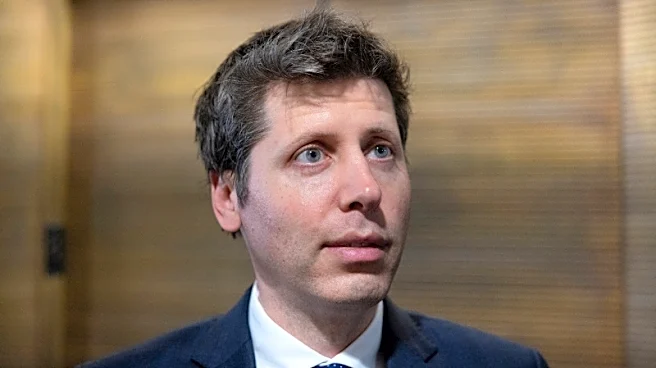
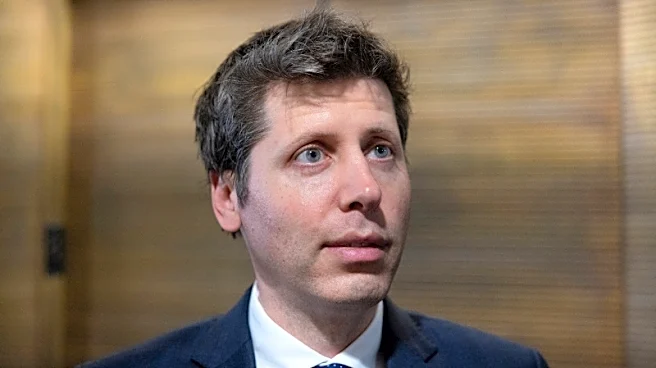
Devin Parekh, co-runner of the investment firm Insight Partners for 26 years, discussed the firm's diversified investment strategy in an interview with TechCrunch. While many venture capitalists are heavily concentrating their investments in frontier
AI labs like OpenAI and Anthropic, Insight Partners, with $90 billion in assets under management, maintains a broader approach. Parekh noted that the firm invests globally across early-stage, growth, buyouts, and secondaries, with no fixed geographic or strategy allocation. He highlighted that while Insight Partners does hold stakes in OpenAI and Anthropic, the internal debate was more about the timing of earlier rounds rather than the investment itself, given their later-stage involvement. Parekh emphasized the importance of diversification, stating that 'this business has always rewarded diversification over a long horizon,' and that LPs generally do not want excessive concentration. He also mentioned the firm's focus on returning capital to LPs, having returned over $20 billion in the last two years.
Why It's Important?
Insight Partners' diversified investment strategy, as articulated by Devin Parekh, is significant in the current venture capital landscape, which is seeing a massive influx of capital into a few dominant AI companies. This approach contrasts sharply with the trend of many funds concentrating a large percentage of their capital into single, high-profile AI ventures. The firm's emphasis on diversification and liquidity for Limited Partners (LPs) highlights a more cautious and long-term perspective in an often-frenzied market. This strategy could serve as a model for other investment firms looking to mitigate risks associated with over-concentration in a volatile sector. The discussion also sheds light on the evolving dynamics of venture capital, where early-stage valuations are rising rapidly without commensurate data, and the increasing importance of returning cash to LPs, especially for funds that raised significant capital in recent years but have yet to provide liquidity.
What's Next?
Insight Partners is expected to continue its diversified investment approach, seeking opportunities across various stages and geographies rather than solely focusing on the most hyped sectors. Parekh's comments suggest that the firm will remain opportunistic, doubling down on winners within its portfolio while being prepared to pull back from underperforming investments. The firm's focus on liquidity for LPs indicates a continued effort to provide returns through strategic sales and IPOs. As the AI market matures and more companies, including Anthropic and potentially OpenAI, go public, the broader venture capital industry may face pressure to demonstrate similar returns and liquidity. Insight Partners' strategy could influence other firms to re-evaluate their own concentration risks and liquidity management, especially as the 'boom-bust cycle' of venture capital continues to play out. The firm will likely continue to monitor emerging technologies like physical AI, but will only invest when they become 'real businesses' rather than 'science projects.'
Beyond the Headlines
Beyond the financial strategies, Insight Partners' approach, as described by Devin Parekh, touches on deeper philosophical aspects of investment and risk management. In an era where venture capitalists are often seen as 'experts on everything,' Parekh's humility and focus on letting 'the portfolio do the talking' suggest a more grounded and less performative style of leadership. The firm's willingness to invest in rival companies like OpenAI and Anthropic, while managing potential conflicts of interest, reflects a pragmatic view of market opportunities rather than strict ideological alignment. This raises ethical questions about competition and collaboration within the tech ecosystem. Furthermore, Parekh's observation that 'you can’t compound $40 billion at 50% every two months for two years without becoming the world economy' highlights the unsustainable nature of exponential growth expectations and the eventual need for even the most successful companies to transition to 'normal-growth' phases. This perspective offers a valuable counter-narrative to the often-unrealistic expectations prevalent in the tech investment world, emphasizing long-term sustainability over short-term hype.