



What's Happening?
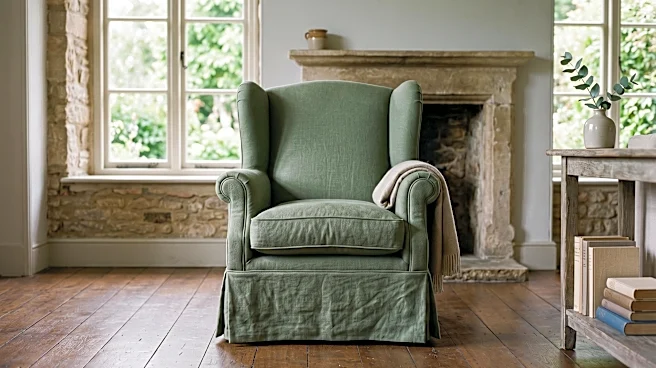
Skirted furniture, a design element prominent in 1980s and 1990s decor and traditional English country-house aesthetics, is experiencing a resurgence. Designers are incorporating pleated, draped, and dressed fabrics onto various furniture pieces, including
sofas, sinks, bed frames, and breakfast banquettes. This trend is gaining acceptance, particularly among younger generations, who appreciate its authentic, aged, and charming appeal. The shift away from minimalist design is contributing to the return of skirted furniture, as it adds a sense of whimsy and softness to homes. Interior designers like Claire Staszak of Centered by Design, Bridget Tiek of TIEK BYDAY, and Heather French note that fabric quiets a room and makes it feel lived-in and welcoming, contrasting with the hard edges and echoing spaces of minimalist styles. The trend allows for easy upgrades to existing furniture and architectural elements, transforming them with fabric.
Why It's Important?
The re-emergence of skirted furniture signifies a broader shift in U.S. home decor trends, moving away from stark minimalism towards more traditional, cozy, and personalized aesthetics. This trend impacts the furniture and textile industries, potentially increasing demand for specific fabrics, patterns, and custom upholstery services. Consumers are increasingly seeking comfort and character in their living spaces, which could influence purchasing decisions for home furnishings. The emphasis on 'authentic, aged, and charming' elements suggests a growing appreciation for vintage and handcrafted items, potentially boosting small businesses and artisans specializing in traditional design. Furthermore, the trend highlights a desire for 'softness' and 'whimsy' in daily life, reflecting a cultural inclination towards creating more inviting and less austere home environments. This shift could also influence interior design education and professional practices, as designers adapt to evolving client preferences and incorporate these traditional elements into modern contexts.
What's Next?
As the skirted furniture trend continues to evolve, consumers can expect to see a wider variety of fabric choices, patterns, and tailoring options available. Designers recommend intentional use of skirts, advising on appropriate fabric textures, colors, and styles (gathered, straight, pleated, or ruffled) to complement a home's overall aesthetic. The trend is likely to influence furniture manufacturers to offer more skirted options or customizable pieces. There may also be an increase in demand for professional tailoring services for those looking to incorporate skirts into existing furniture, as designers emphasize the importance of crisp tailoring for a polished look. The trend's emphasis on classic patterns like ditsy florals, gingham, and tartan suggests these textile designs will remain popular. Home decor retailers will likely feature more skirted furniture and related accessories, catering to the growing interest in this romantic and whimsical design detail.
Beyond the Headlines
The return of skirted furniture extends beyond mere aesthetics, reflecting deeper cultural and psychological shifts. In an increasingly fast-paced and digital world, there's a growing desire for comfort, nostalgia, and a sense of grounding within one's home. Skirted furniture, with its historical roots and soft textures, offers a tangible connection to a simpler, more traditional past, providing a sense of tranquility and warmth. This trend can be seen as a form of 'nesting,' where individuals seek to create sanctuaries that offer respite from external pressures. Ethically, the emphasis on transforming existing pieces rather than constantly buying new ones could align with more sustainable consumption practices, promoting longevity and reducing waste. Culturally, it signifies a potential rejection of the impersonal and mass-produced, favoring instead items that evoke personality, history, and a handcrafted feel, contributing to a broader movement towards conscious living and personalized environments.