


What's Happening?
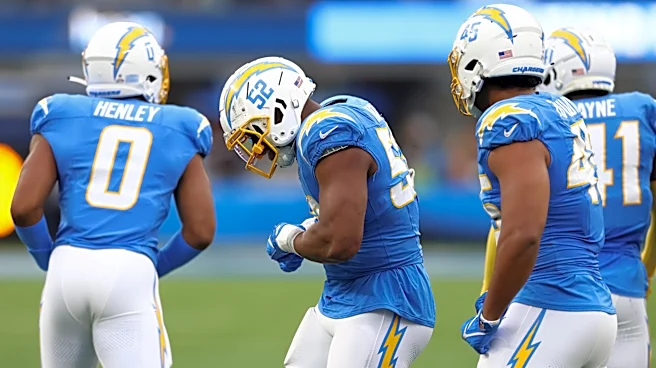
The Los Angeles Chargers' decision to draft Jake Slaughter in the second round of the 2026 NFL Draft is under scrutiny due to his ongoing struggles. Despite being a highly-regarded college player, Slaughter has faced significant challenges in his rookie
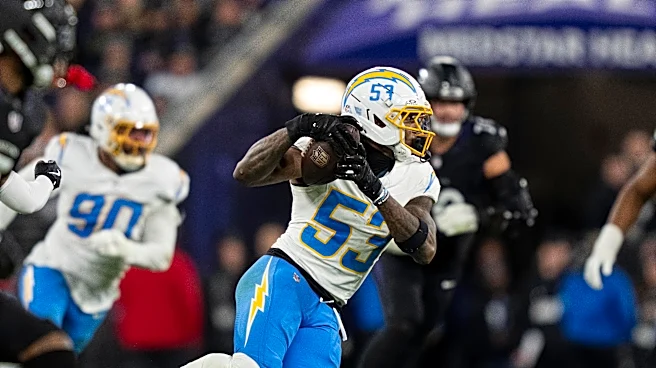
season. The Chargers initially signed Tyler Biadasz to a three-year, $30 million deal, intending for Slaughter to potentially transition to guard. However, Biadasz's season-ending ACL injury forced Slaughter into the center position, a role he had not consistently played in college. His performance has been inconsistent, allowing 14 pressures on 354 pass-blocking snaps through the first nine games and showing below-average production in the run game. While there was a slight improvement in his recent game against the Baltimore Ravens, allowing only one pressure, his long-term viability at either center or guard remains a significant question mark for the team's offensive line.
Why It's Important?
The performance of Jake Slaughter is critical for the Chargers' offensive line stability and future strategic planning. The team invested significant draft capital in him, and his inability to consistently perform at a high level creates a void in their interior line. This situation is compounded by the fact that the Chargers did not adequately address the guard positions, leaving them with a lack of reliable options. The struggles of a second-round pick can impact team morale, future draft strategies, and the overall effectiveness of the offense. If Slaughter does not develop into a starting-caliber player, the Chargers will need to allocate additional resources, either through free agency or future drafts, to secure their offensive line, potentially diverting funds or picks from other critical areas of need. The uncertainty surrounding Slaughter's role also affects the team's financial commitments, particularly concerning Tyler Biadasz's contract, which has a substantial dead cap hit if he were to be released prematurely.
What's Next?
The Chargers face crucial decisions regarding their offensive line in the upcoming offseason. They will need to make significant additions at both guard spots, as their previous attempts to find solutions through competition did not yield positive results. The team must also determine Jake Slaughter's long-term role. With Tyler Biadasz's contract almost fully guaranteed for next season, Slaughter's path to becoming a full-time starter at center is likely delayed until 2028, when Biadasz's dead cap hit would be significantly lower. Moving Slaughter to guard does not appear to be a viable option given past attempts and his performance. The Chargers' front office will need to assess whether to continue investing in Slaughter's development, potentially taking a full year off his progress to address immediate needs, or explore other avenues to solidify their interior offensive line. His continued performance in the remaining games will be closely watched as the team plans for the future.
Beyond the Headlines
The challenges faced by Jake Slaughter highlight the inherent risks and complexities of NFL draft selections, particularly for offensive linemen transitioning positions. The pressure on high draft picks to perform immediately is immense, and the Chargers' situation underscores how a single injury (Biadasz's ACL) can drastically alter a team's strategic plans and expose underlying roster weaknesses. This scenario also brings into focus the coaching staff's ability to develop talent and adapt players to new roles within a specific offensive scheme. The long-term implications extend beyond just the Chargers; it reflects a broader league-wide challenge of identifying and cultivating offensive line talent, which is often considered the backbone of any successful NFL team. The outcome of Slaughter's development will serve as a case study for future draft strategies and player management in the league.