








What's Happening?
Animal rights activists in the U.K. have escalated their campaign against Pret A Manger, delivering a petition with nearly 100,000 signatures to the company's London headquarters. This action follows Pret's decision to delay its commitment to stop using
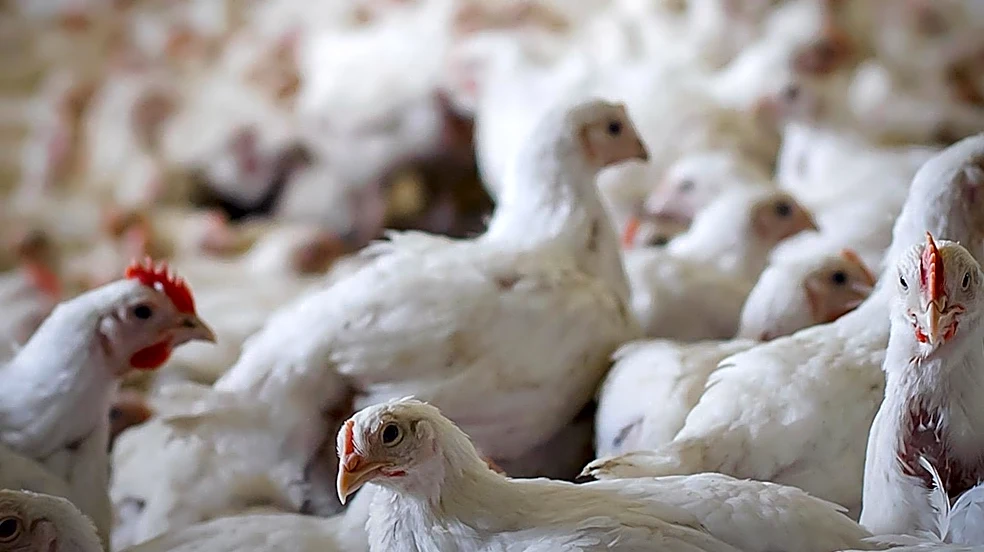
fast-growing 'frankenchicken' breeds from the original 2026 deadline to 2032. Demonstrations, including a march from Trafalgar Square, were organized by groups like Animal Equality and Anima. Critics argue that these 'frankenchickens' suffer from severe health issues due to their rapid growth, such as lameness, broken bones, and heart failure, living only about six weeks. Activists are demanding a detailed public roadmap from Pret outlining how it plans to meet the revised 2032 deadline, with promises to cease protests once such a plan is published. Pret A Manger, while acknowledging its participation in the Better Chicken Commitment, has questioned why it is being targeted when other companies have abandoned similar welfare commitments entirely.
Why It's Important?
This situation highlights the growing influence of animal welfare advocacy groups on corporate practices and consumer expectations, particularly in the food industry. The delay by Pret A Manger, a brand that has cultivated an image of quality and trust, could erode consumer confidence and lead to accusations of 'greenwashing'—where companies present themselves as environmentally or ethically conscious without fully delivering on their promises. For U.S. businesses with international operations or similar sustainability pledges, this serves as a cautionary tale regarding the importance of transparent and timely adherence to commitments. The public pressure and significant petition demonstrate that consumers and activists are increasingly scrutinizing corporate social responsibility claims, potentially impacting brand reputation and sales. This trend could lead to stricter regulatory oversight on corporate environmental, social, and governance (ESG) claims, influencing how companies across various sectors communicate their ethical practices.
What's Next?
Activists have stated they will continue their protests and pressure campaigns until Pret A Manger releases a credible, detailed public roadmap outlining how it will achieve its commitment to stop using 'frankenchicken' breeds by 2032. This roadmap is expected to include specific dates, benchmarks, and measurable steps. The ongoing campaign by Anima, supported by a significant financial backing, suggests sustained pressure on Pret. The company will likely need to decide whether to provide the requested detailed plan to mitigate further reputational damage and ongoing protests or risk continued public backlash. This situation could also prompt other food retailers and restaurant chains, both in the U.K. and potentially in the U.S., to re-evaluate their own animal welfare commitments and communication strategies to avoid similar public scrutiny.
Beyond the Headlines
The 'frankenchicken' controversy extends beyond a single company's pledge, touching upon broader ethical considerations in industrial agriculture and the power dynamics between corporations and advocacy groups. It underscores the ethical dilemma of prioritizing rapid growth and cost efficiency in food production over animal welfare. The term 'frankenchicken' itself is a powerful rhetorical tool, designed to evoke a sense of unnaturalness and ethical concern, highlighting the cultural shift towards greater awareness of animal sentience and suffering. This movement could contribute to long-term changes in agricultural practices, pushing for more humane and sustainable farming methods. Furthermore, the incident reflects a growing consumer demand for transparency and accountability from corporations, suggesting that businesses can no longer rely solely on marketing to convey ethical practices but must demonstrate tangible action and verifiable progress.