


What's Happening?
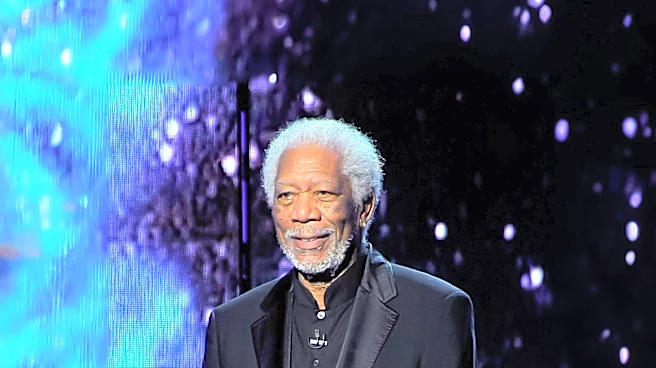
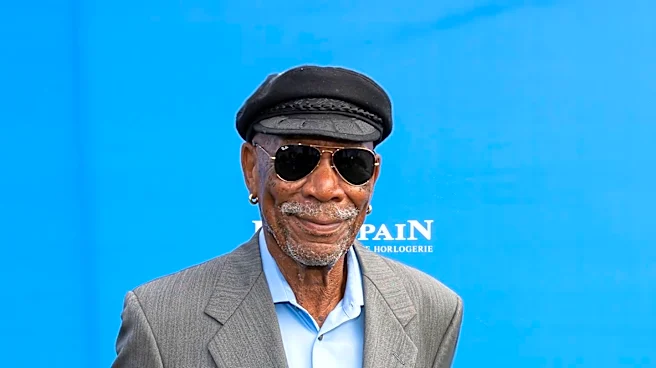
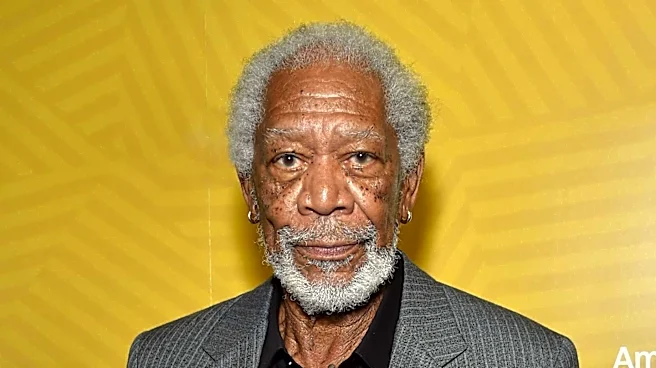
Before his acclaimed film career, actor Morgan Freeman was a prominent cast member on the 1970s educational television series, 'The Electric Company.' This show, produced by the Children's Television Workshop, aimed to help children develop reading skills
through sketch comedy. One notable segment, 'Spidey Super Stories,' featured the first live-action portrayal of Spider-Man. In one particular sketch during Season 4, Freeman played Dracula, who was ultimately stopped by Spider-Man before he could harm an innocent woman. Freeman spent six years on the series, which he later described as a 'long gig' that left him 'fried' due to its demanding nature. The 'Spidey Super Stories' segment uniquely presented Spider-Man, keeping him in costume, having him communicate solely through comic book speech bubbles to encourage reading, and avoiding the introduction of other Spider-Man comic characters.
Why It's Important?
This historical detail highlights the foundational work of a celebrated actor and the innovative educational programming of the 1970s. 'The Electric Company' played a significant role in early childhood education, utilizing creative methods to engage young viewers. Morgan Freeman's involvement in such a program underscores the diverse paths many actors take before achieving widespread recognition. For audiences, it provides a nostalgic look at a groundbreaking children's show and an unexpected early role for a future Oscar winner. The show's unique approach to character portrayal, particularly with Spider-Man, demonstrates a commitment to its educational mission, prioritizing reading encouragement over traditional narrative elements. This period of Freeman's career, though demanding, contributed to his development as a performer.
What's Next?
While Morgan Freeman has not revisited his roles as Dracula or Spider-Man directly, his career trajectory led him to other iconic superhero-adjacent roles, such as Lucius Fox in Christopher Nolan's 'Dark Knight' trilogy. This role, where he played a key scientific and strategic ally to Batman, echoes the inventive and supportive nature of his earlier work, albeit in a more mature and dramatic context. The legacy of 'The Electric Company' continues to be recognized for its pioneering educational approach, and Freeman's early contributions to it remain a notable part of his extensive filmography. Future retrospectives on his career or on classic children's television may continue to highlight this unique intersection.
Beyond the Headlines
The story of Morgan Freeman's time on 'The Electric Company' offers a glimpse into the evolution of educational television and the early careers of Hollywood legends. It demonstrates how seemingly disparate roles can contribute to an actor's development and public persona. The show's commitment to innovative educational techniques, such as using comic book speech bubbles for Spider-Man, reflects a broader pedagogical philosophy of the era. This early exposure to a demanding production environment likely honed Freeman's acting skills and work ethic, which would serve him throughout his illustrious career. It also highlights the cultural impact of children's programming, which often features future stars in formative roles, shaping both their careers and the minds of young viewers.