









What's Happening?
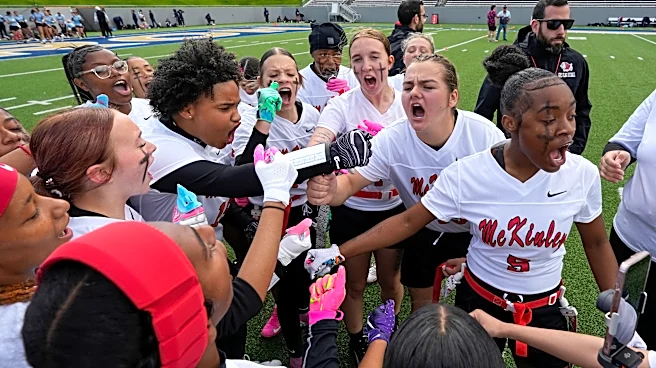
The City Section is continuing its pilot program for boys flag football for a second year, reflecting the sport's increasing popularity. This initiative, which began last year, is set to expand from eight to sixteen teams, primarily involving small charter
schools. The program allows schools to form flag football teams as an alternative to traditional 11-man football. Last year, schools like Sotomayor and Torres, which temporarily dropped their 11-man teams, participated in the flag football league. This year, they plan to resume their 11-man teams while still engaging in flag football. The program's expansion is part of a broader discussion within the California Interscholastic Federation (CIF) about the future of boys flag football, especially as it gains exposure with its inclusion in the 2028 Olympic Games in Los Angeles.
Why It's Important?
The expansion of boys flag football in the City Section highlights a significant shift in high school sports, driven by safety concerns and changing preferences. Flag football offers a less contact-intensive alternative to traditional tackle football, appealing to parents worried about head injuries. This shift could influence the future of high school sports, potentially reducing participation in 11-man football. The program's growth also reflects broader trends in youth sports, where safety and inclusivity are becoming increasingly important. As flag football gains recognition, it could lead to more schools adopting the sport, impacting athletic programs and resource allocation.
What's Next?
As the pilot program continues, discussions within the CIF and among high school coaches will likely intensify. Decisions will need to be made about whether to officially recognize boys flag football as a sport and how to integrate it into existing athletic programs. Schools will have to consider the implications of offering both flag and 11-man football, particularly regarding resource allocation and student participation. The potential for flag football to draw participants away from other spring sports, like track and field, will also need to be addressed. The outcome of these discussions could set a precedent for other regions considering similar programs.