





What's Happening?
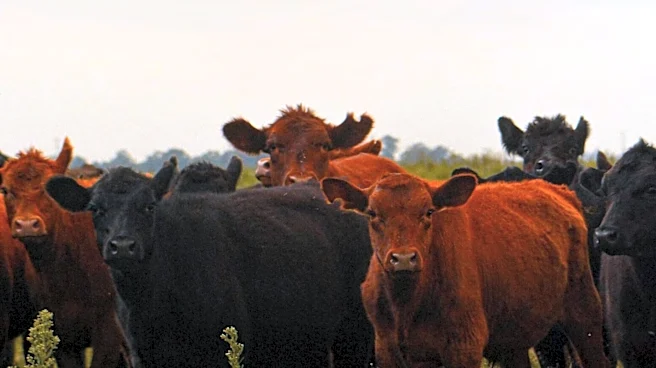
The U.S. beef market is experiencing fluctuations as beef cow slaughter rates and cash cattle prices adjust to seasonal patterns and external pressures. Recent reports indicate a slight rebound in cash cattle prices, reaching $233 live and $366 dressed,
although still below last year's levels. Beef cow slaughter, which typically increases in the fall, is expected to remain steady through August before rising towards Thanksgiving. However, severe drought conditions in the western U.S. are impacting pasture quality and hay supplies, potentially influencing slaughter rates and market dynamics.
Why It's Important?
The beef market's current state reflects broader economic and environmental challenges. The drought in the western U.S. is a significant factor affecting cattle producers, as deteriorating pasture conditions force difficult decisions regarding herd management. The market's response to these conditions, including price adjustments and slaughter rates, will have implications for beef supply and pricing. The industry's ability to navigate these challenges will be crucial for maintaining stability and meeting consumer demand.
What's Next?
As the market adjusts to seasonal patterns and environmental pressures, stakeholders will need to monitor conditions closely. The potential for increased slaughter rates in the fall could impact beef supply and prices. Producers may need to adapt strategies to manage herd sizes and optimize feed resources amid ongoing drought conditions. The market's response to these challenges will be critical in determining the trajectory of beef prices and supply stability in the coming months.