






What's Happening?
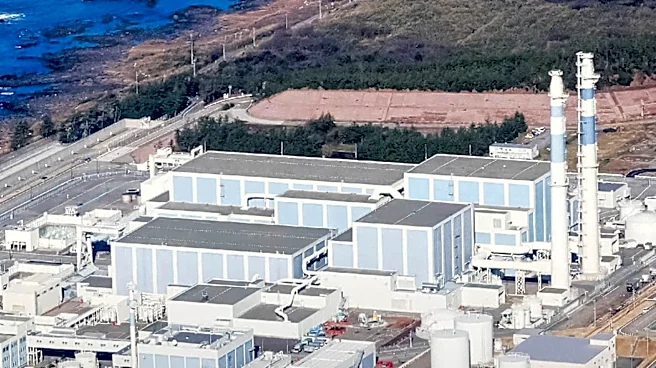
Holtec International is pursuing a strategy of acquiring decommissioned nuclear power plants with the intention of redeveloping them with new small modular reactors (SMRs). This approach is exemplified by their plans for the Oyster Creek Generating Station
in Lacey Township, New Jersey, where they aim to install four SMR-300 units, totaling 1,360 megawatts, on the site previously occupied by a single 636-megawatt reactor. Holtec recently achieved a regulatory milestone with the approval of Oyster Creek's License Termination Plan, which is a roadmap for the final stages of decommissioning the old plant. The company is also exploring similar projects across Arkansas, Mississippi, Louisiana, and Texas through a nonbinding memorandum of agreement with Entergy and Hyundai Engineering and Construction. This strategy leverages existing infrastructure, such as transmission lines and cooling water intakes, and a local labor pool experienced in nuclear operations.
Why It's Important?
Holtec's strategy could fundamentally alter the economics of nuclear power development in the U.S. By repurposing existing nuclear sites, the company aims to significantly reduce the time and cost associated with permitting and construction, which are major barriers for new nuclear builds on virgin land. This approach offers a potential solution for meeting the growing demand for carbon-free baseload power, particularly from energy-intensive sectors like artificial intelligence data centers, which are actively seeking long-term power purchase agreements. The proposed SMRs, often paired with solar and battery storage, align with grid operators' needs for firming up intermittent renewable generation. If successful, this model could transform decommissioned nuclear sites from liabilities into valuable assets, creating thousands of construction jobs and hundreds of permanent positions, and generating new tax revenue.
What's Next?
While the License Termination Plan for Oyster Creek has been approved, this is a demolition document and not a permit for new construction. Holtec will need to pursue a separate and extensive licensing process with the Nuclear Regulatory Commission (NRC) for the construction and operation of the four new SMR-300 units at Oyster Creek. The company's timeline for commercial operation of all four units is currently set for 2036. Holtec's progress at Oyster Creek is also linked to the restart of the Palisades plant in Michigan, which is intended to be the first commercial reactor in U.S. history brought back from permanent shutdown, with the first two SMR-300 units, Pioneer 1 and 2, planned for that site. Delays at Palisades could impact the Oyster Creek timeline. Additionally, New Jersey has recently enacted legislation to procure at least 1,100 megawatts of new nuclear generation, creating a competitive process that Holtec will likely participate in.
Beyond the Headlines
Holtec's ambitious plan to redevelop decommissioned nuclear sites with SMRs highlights the evolving landscape of nuclear energy in the U.S. This strategy confronts the long-standing challenge of nuclear waste, as 4,504 spent fuel assemblies remain on the Oyster Creek property with no federally approved permanent disposal solution. The success of this model hinges on overcoming significant regulatory hurdles, managing first-of-a-kind execution risks, and navigating supply chain complexities for nuclear-grade components. The involvement of major tech companies as potential power purchasers underscores the critical role of reliable, carbon-free energy in the digital economy. This approach also raises questions about the balance between economic development, environmental protection, and public safety, particularly in communities that have historically hosted nuclear facilities. The shift in New Jersey's political stance on new nuclear construction, by removing a provision requiring a permanent waste disposal method, indicates a growing willingness to embrace nuclear power despite unresolved issues.