




What's Happening?
Uber Eats is expanding its same-day grocery delivery services in Rockwell, North Carolina, providing residents with access to groceries from various supermarkets, convenience stores, local grocery shops, and neighborhood delis. The service boasts rapid
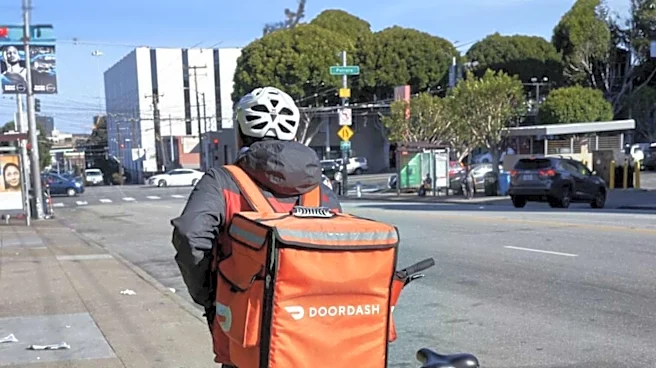
delivery times, with some orders potentially arriving in as little as 25 minutes. Customers can monitor their orders and estimated arrival times in real-time. This expansion aims to offer a convenient solution for obtaining fresh produce, pantry staples, snacks, drinks, household items, and last-minute ingredients. In addition to delivery, Uber Eats also facilitates grocery pickup from select stores in Rockwell, allowing customers to place orders online and collect them in person. Store availability and delivery speed are subject to factors such as location, courier availability, order size, and delivery address.
Why It's Important?
The introduction of rapid grocery delivery by Uber Eats in Rockwell highlights the increasing demand for convenience and efficiency in the U.S. retail sector. This service offers significant benefits to Rockwell residents, particularly those with busy schedules, limited access to transportation, or mobility challenges, by making essential goods more accessible. It also intensifies the competitive landscape for local grocery businesses, compelling them to adapt by either integrating with delivery platforms or enhancing their own digital and logistical capabilities. For participating businesses, this expansion can lead to increased customer reach and sales, while also necessitating operational adjustments for efficient order fulfillment. The promise of delivery in under half an hour sets a new benchmark for speed, influencing consumer expectations across the grocery market.
What's Next?
As Uber Eats continues to roll out and refine its grocery delivery services, it is expected to encounter heightened competition from both established and emerging delivery platforms, as well as traditional retailers. The company's ability to maintain efficient logistics and a robust network of couriers will be crucial for sustaining its rapid delivery promise. Local grocery stores in Rockwell and similar markets may consider further collaborations with Uber Eats or invest in their proprietary delivery systems to remain competitive. Consumer adoption will largely depend on factors such as pricing, delivery fees, and the overall quality of the service. The success of these rapid delivery models could also influence local infrastructure and traffic patterns as more delivery vehicles operate within residential areas. Furthermore, the data generated by these services could offer valuable insights into local purchasing behaviors and preferences.
Beyond the Headlines
The proliferation of ultra-fast grocery delivery services like Uber Eats in smaller communities such as Rockwell raises broader questions about the future of traditional retail and the evolving nature of employment in the gig economy. While offering undeniable convenience, these services can exert pressure on local businesses that may struggle to compete with the scale and technological prowess of larger platforms. The reliance on independent contractors for deliveries also brings to the forefront issues concerning worker benefits, fair compensation, and job security. Additionally, the environmental implications of increased short-distance deliveries, including vehicle emissions and packaging waste, will become a more pressing concern. The shift towards on-demand consumption could also alter community dynamics, potentially reducing foot traffic in local stores and changing how residents interact with their neighborhoods.