




What's Happening?
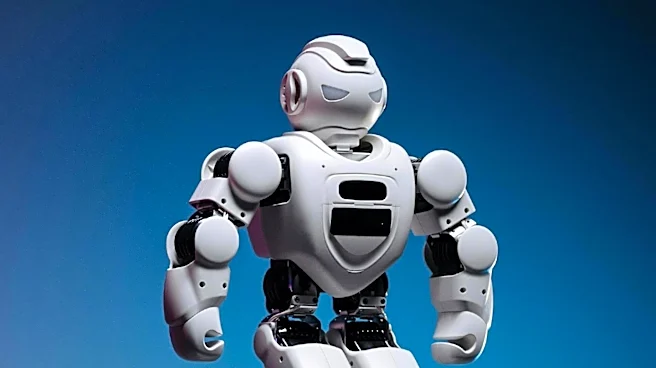
Tesla is reportedly encountering substantial difficulties in the development and production of its Optimus humanoid robot, particularly concerning the functionality of its hands and the robot's ability to learn basic tasks. According to The Information,
while Tesla has increased Optimus production to several hundred units per week, most are for internal testing rather than customer shipments. A major engineering challenge for over a year has been the durability and reliable assembly of the robot's hands. Instead of integrated touch sensors, Tesla is developing a 'sensing glove' that can be hot-swapped. Furthermore, despite extensive training data, the robots are struggling to learn fundamental tasks, often taking days to master them. This progress is slower than anticipated, contrasting with CEO Elon Musk's earlier ambitious predictions for Optimus deployment and capabilities.
Why It's Important?
The challenges faced by Tesla's Optimus robot have significant implications for the robotics and manufacturing industries, as well as for Tesla's strategic direction. If Tesla, a leader in innovation, struggles with fundamental aspects like robotic dexterity and learning, it highlights the immense complexity and current limitations of advanced humanoid robotics. This could temper expectations across the industry regarding the near-term widespread adoption of general-purpose humanoid robots in manufacturing or other sectors. For Tesla, the slow progress could impact its diversification strategy, as CEO Elon Musk has indicated a shift towards AI and robotics. Delays in Optimus's development could affect investor confidence and the company's ability to meet its ambitious production and deployment targets, potentially influencing its market valuation and competitive position in the burgeoning robotics market.
What's Next?
Tesla will likely continue to focus on resolving the engineering challenges related to Optimus's hands and improving its learning algorithms. The development of a 'sensing glove' suggests a potential workaround for the hand durability issues, but its effectiveness and integration will be critical. The company will need to demonstrate significant breakthroughs in the robot's ability to perform complex, non-repetitive tasks to justify its ambitious production targets and market claims. Future updates from Tesla, particularly during investor calls or product demonstrations, will be closely watched for signs of progress or further delays. The success or failure of Optimus could set a precedent for other companies investing in humanoid robotics, influencing research and development priorities across the sector.
Beyond the Headlines
The struggles with Optimus's development underscore a broader philosophical and technological debate about the feasibility and timeline of achieving truly general-purpose humanoid robots. The difficulty in replicating human-like dexterity and cognitive learning in a machine highlights the intricate nature of biological systems and the current limitations of artificial intelligence and mechanical engineering. This situation also raises questions about the balance between ambitious corporate vision and the practical realities of technological development. While Elon Musk's pronouncements often drive innovation, the Optimus case illustrates that even with significant resources, fundamental scientific and engineering hurdles remain. The long-term implications could influence how society perceives the timeline for advanced AI and robotics integration into daily life and industrial processes, potentially leading to a more realistic assessment of the path to fully autonomous, versatile robots.