






What's Happening?
Barcelona-based AI platform Fermat has successfully raised an $8 million seed funding round, led by Kibo Ventures and Lunar Ventures. This significant investment is earmarked for expanding the company's software capabilities from a design tool to encompass
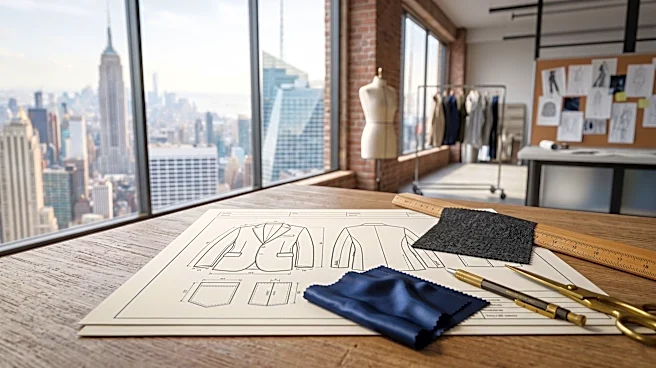
full garment production, with the immediate launch of its 'Techpacks' feature. A key strategic move for Fermat is the establishment of a new office in New York, aiming to bolster its presence in the U.S. market, which already accounts for a third of its revenue. Fermat's AI models are designed to transform sketches and mood boards into realistic renders, allowing designers to experiment with materials and garment variations efficiently. The company's 'Techpacks' tool automates the creation of factory-ready specifications, including technical flats, construction details, measurements, bills of materials, and colorways, significantly reducing the time traditionally spent on sampling and product development. Over 350 customers across 14 countries, including major retailers like ASOS, J.Crew Group, New Look, S. Oliver, and Tendam, currently utilize Fermat's platform.
Why It's Important?
This funding and expansion are crucial for the U.S. fashion industry, which is under increasing pressure to shorten product development cycles. The ability of Fermat's AI software to convert design concepts into factory-ready specifications in minutes, rather than weeks, offers a substantial competitive advantage. This efficiency can lead to faster time-to-market for fashion brands, enabling them to respond more quickly to trends and consumer demands. For U.S. retailers and designers, adopting such AI tools can result in significant cost savings by reducing reliance on physical samples and streamlining the design-to-production workflow. The investment also signals a growing trend of integrating advanced AI into creative industries, potentially reshaping traditional design and manufacturing processes. Companies that embrace these technologies stand to gain in agility and innovation, while those that lag may face challenges in keeping pace with the accelerated industry standards.
What's Next?
Fermat plans to use the newly acquired capital to further develop its software, extending its functionalities beyond design to cover the entire garment production lifecycle. The opening of the New York office will facilitate closer collaboration with its U.S. client base and support further market penetration. The company's focus on 'Techpacks' suggests an immediate push to standardize and automate the technical aspects of fashion production. As more fashion companies, including the 17 major firms planning to invest $40.9 billion in technology by 2026, integrate AI into their operations, the demand for solutions like Fermat's is expected to grow. This could lead to a broader industry shift towards AI-driven design and production, potentially setting new benchmarks for efficiency and innovation in the fashion sector.
Beyond the Headlines
The rise of AI in fashion design, exemplified by Fermat's expansion, highlights a deeper transformation in creative industries. While AI tools like Fermat's enhance efficiency and accelerate production, they also raise questions about the evolving role of human designers. The technology allows for rapid iteration and experimentation, potentially freeing designers from repetitive tasks to focus on higher-level creative concepts. However, it also necessitates a new skill set for designers, who must learn to effectively leverage AI as a collaborative tool. Furthermore, the increased reliance on AI for design and production specifications could lead to a more standardized, data-driven approach to fashion, potentially impacting the uniqueness and artisanal quality of certain designs. The ethical implications of AI-generated designs, including intellectual property and authorship, will also become increasingly pertinent as these technologies become more sophisticated and widespread.