


What's Happening?
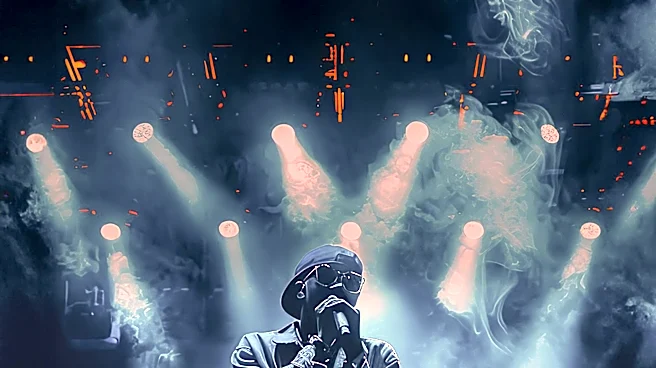
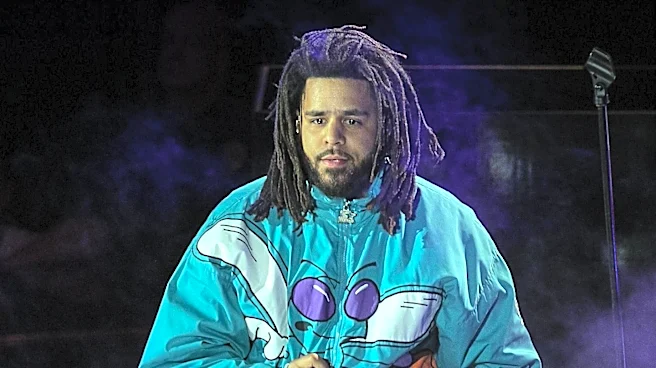
A letter to the editor published in The Daily Tar Heel expresses personal ambivalence regarding the lyrics of hip-hop artist J. Cole. The author, Josh Orol, initially felt excited about J. Cole performing on campus, appreciating his connection to 'Carolina
blue kicks.' However, after considering the correlation between how women are depicted in pop culture and the prevalence of sexual assault, Orol examined J. Cole's lyrics. He found that many of J. Cole's songs refer to women as 'hoes' and convey a message of unavailability in relationships. This contrasts with J. Cole's serious raps about growing up in the poor Black community, leading to confusion for the author. The letter highlights a perceived contradiction in an artist who addresses systemic issues affecting one minority group while potentially contributing to the oppression of another through his lyrical content.
Why It's Important?
This discussion is important as it highlights the ongoing debate within the music industry, particularly hip-hop, regarding lyrical content and its societal impact. The ambivalence expressed by the author reflects a broader concern about the potential influence of popular music on perceptions of gender and relationships, especially among young audiences. When artists like J. Cole, who are recognized for their commentary on social issues, also use language that can be seen as derogatory towards women, it creates a complex ethical dilemma. This situation prompts listeners and critics to consider the full scope of an artist's message and the potential ramifications of their words, even if those words are part of a larger narrative about overcoming adversity. It underscores the responsibility artists hold in shaping cultural norms and attitudes.
What's Next?
The ongoing conversation surrounding J. Cole's lyrics and similar content in hip-hop is likely to continue to evolve. As societal awareness of issues like gender equality and violence prevention grows, artists may face increased scrutiny regarding their lyrical choices. This could lead to more artists consciously addressing these concerns in their work or engaging in public dialogue about the intent and impact of their music. Audiences, particularly younger generations, may become more discerning consumers of media, demanding content that aligns with their values. Music critics and academic institutions might also further explore the intersection of artistic expression, social commentary, and ethical responsibility in popular culture, potentially influencing future trends in music production and consumption.
Beyond the Headlines
The deeper implications of this discussion extend to the broader cultural landscape and the role of art in reflecting and shaping societal values. The ambivalence felt by the author points to a fundamental tension between artistic freedom and social responsibility. While artists often draw from their lived experiences and cultural contexts, the widespread dissemination of their work means it can have unintended consequences. This situation also touches upon the complexities of identity politics, where an artist might be seen as a voice for one marginalized group while simultaneously perpetuating harmful stereotypes against another. It encourages a more nuanced understanding of how different forms of oppression intersect and how cultural products can inadvertently reinforce them, prompting a re-evaluation of what constitutes 'conscious' or 'socially responsible' art.