






What's Happening?
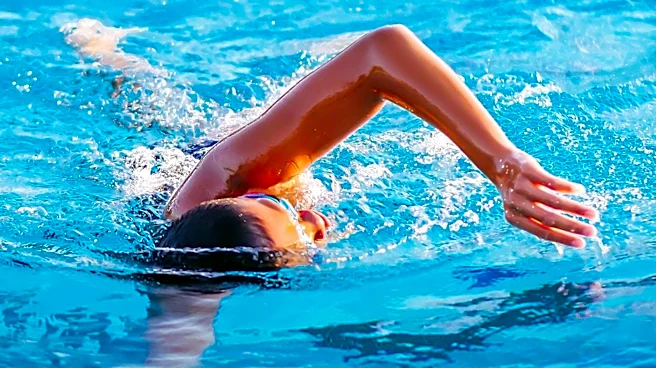
Breathwork is being highlighted as a valuable technique for enhancing water confidence among swimmers, particularly in challenging conditions such as cold water or open seas. The practice involves controlled breathing exercises that help individuals manage
stress and maintain composure in potentially intimidating aquatic environments. By focusing on breath control, swimmers can reduce the body's immediate stress response, allowing for calmer entries and improved technique. This approach is not about holding one's breath for extended periods but rather about understanding and managing one's breathing patterns to foster a sense of safety and control in the water.
Why It's Important?
The significance of breathwork in water activities lies in its potential to improve safety and enjoyment for swimmers. By reducing stress and anxiety, breathwork can lead to better decision-making and technique, which are crucial for safe water activities. This is particularly important for individuals who may not be strong swimmers but wish to engage in activities like snorkeling or freediving. The practice can also enhance the overall experience by allowing participants to focus on the enjoyment of the activity rather than being overwhelmed by fear or discomfort. As such, breathwork could become an essential component of water safety training and recreational water activities.
What's Next?
As breathwork gains recognition for its benefits in water activities, it is likely that more swimming instructors and water sports programs will incorporate these techniques into their training. This could lead to the development of specialized breathwork courses tailored for different water activities, such as snorkeling, freediving, and open water swimming. Additionally, there may be increased interest in research to further understand the physiological and psychological impacts of breathwork in aquatic environments, potentially leading to new guidelines and best practices for water safety and training.
Beyond the Headlines
Beyond its immediate benefits, breathwork in water activities may also contribute to broader discussions about mental health and stress management. As individuals learn to control their breathing and manage stress in water, these skills could translate to other areas of life, promoting overall well-being. Furthermore, the emphasis on breathwork highlights the importance of holistic approaches to safety and performance, which consider both physical and mental aspects. This could influence how other sports and activities approach training and preparation, integrating mindfulness and stress management techniques into their routines.