





What's Happening?
Major League Baseball (MLB) players' agents are demonstrating unprecedented solidarity in opposition to the league's push for a salary cap in the upcoming Collective Bargaining Agreement (CBA). This unified front comes as MLB faces a potential lockout
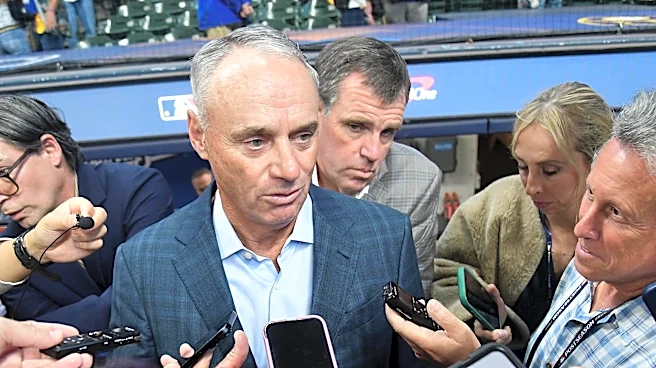
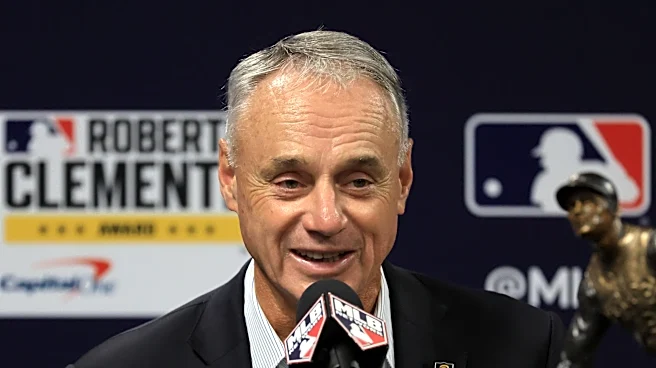
in December. According to reports from The Athletic, agents are strongly resisting the hardline approach taken by Commissioner Rob Manfred and the 30 team owners. Seth Levinson of ACES noted that this level of player solidarity has not been seen since 1994, indicating a strong resolve among players and their representatives. Agents are publicly criticizing MLB's public relations campaign, the owners' insistence on a salary cap despite soaring franchise values, and the perceived attempt to implement an economic system that has proven unpopular with players in other sports like the NBA. Joel Wolfe of The Team explicitly stated that agents would not accept a salary cap or further restraints on player salaries.
Why It's Important?
The unified stance of MLB players' agents against a salary cap carries significant implications for the league's economic structure and future labor relations. MLB is currently the only major professional sports league in the U.S. without a salary cap, allowing for substantial financial disparities between franchises and player contracts. The implementation of a salary cap would fundamentally alter this landscape, potentially limiting player earnings and creating a more standardized economic model across teams. This resistance highlights a deep-seated conflict between player compensation interests and ownership's desire for cost controls and competitive balance. A lockout, if it occurs, would disrupt the league's operations, impact revenue streams for both players and owners, and could alienate fans. The outcome of these negotiations will set a precedent for future labor discussions in professional sports and could redefine the financial dynamics of Major League Baseball for years to come.
What's Next?
The immediate next step involves ongoing negotiations for the new Collective Bargaining Agreement, with a potential lockout looming in December. The strong opposition from players and agents suggests that these negotiations will be contentious and prolonged. Stakeholders, including the MLB Players Association (MLBPA), team owners, and individual agents, will likely continue to articulate their positions publicly and privately. The league may intensify its PR efforts to sway public opinion, while players and agents will likely maintain their united front to resist salary limitations. The resolution of this dispute will determine the economic framework for MLB for the foreseeable future, impacting player salaries, team spending, and the overall competitive landscape. A failure to reach an agreement could lead to a work stoppage, delaying the start of the next season and causing significant financial repercussions for all parties involved.
Beyond the Headlines
Beyond the immediate labor dispute, this standoff reflects a broader tension within professional sports regarding wealth distribution and player rights. The agents' argument that owners are claiming the game is 'broken' despite overwhelming evidence to the contrary, including skyrocketing franchise values, points to a fundamental disagreement over the league's financial health and the fairness of its economic model. This situation could spark renewed debates about the balance of power between players and owners, the role of collective bargaining in sports, and the long-term sustainability of different economic models in professional leagues. The outcome in MLB could influence labor negotiations in other sports, particularly those where players might seek to resist further salary restrictions or advocate for greater shares of league revenues. It also raises ethical questions about the equitable distribution of profits in highly lucrative industries where player talent is the primary driver of value.