





What's Happening?
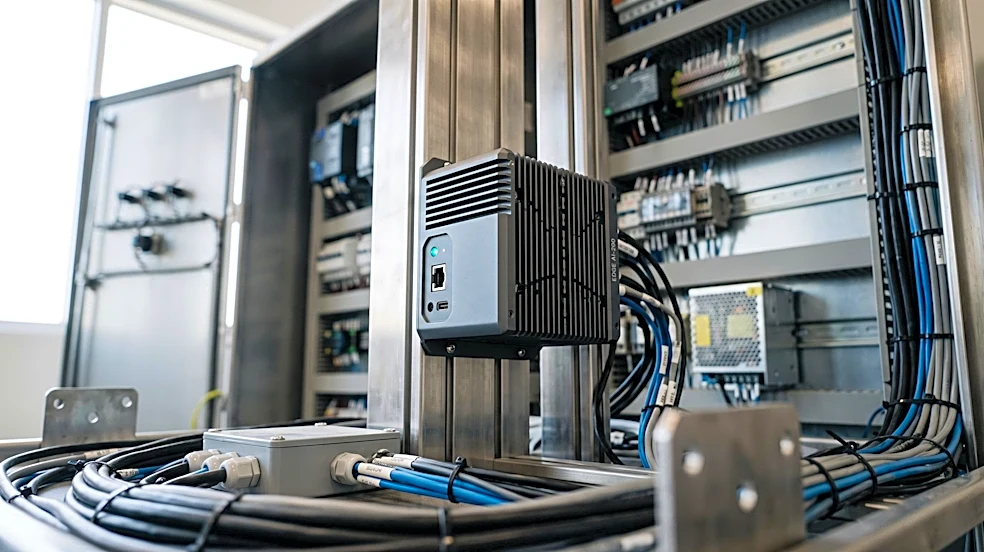
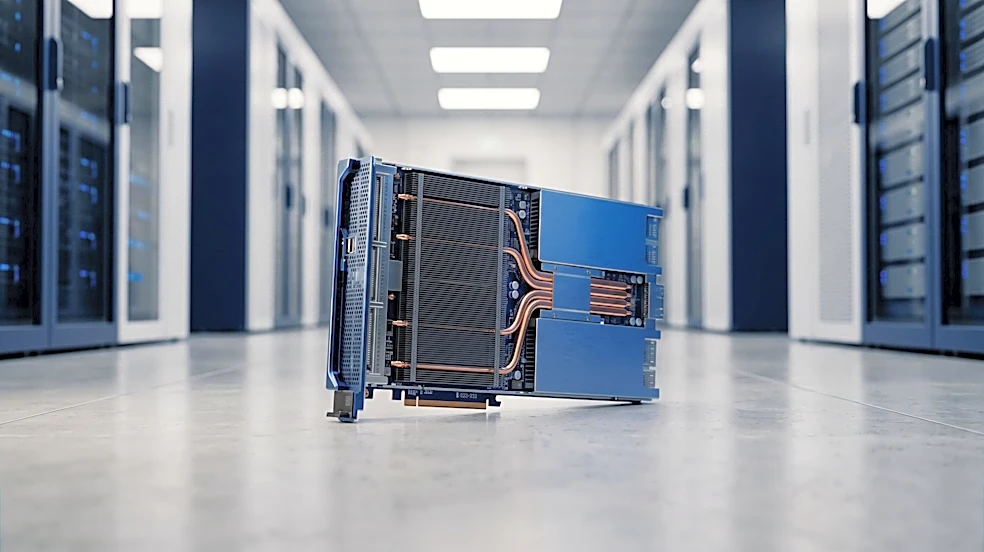
Supermicro has launched a new suite of hardware platforms designed to integrate NVIDIA Aerial RAN Computer technology with Nokia network solutions. These systems are engineered to support AI-driven voice, vision, and physical AI workloads, alongside autonomous
network operations. The hardware includes modular, short-depth configurations suitable for deployment at cell sites, MSO locations, and core network hubs. These systems utilize NVIDIA Grace C1 CPUs and RTX PRO 4500 Blackwell Server Edition GPUs, enabling both radio tasks and AI processing on the same hardware. The 2U ARC-Pro, a key component, is slated for customer testing in late 2026, with general availability expected in the first half of 2027. This initiative aims to enhance spectral efficiency and network automation.
Why It's Important?
This development signifies a notable shift in the telecommunications industry towards consolidating radio and AI workloads onto high-density, modular hardware. By running both radio and AI tasks on shared infrastructure, the new Supermicro solutions aim to streamline network management across distributed sites, leading to improved network automation and increased spectral efficiency. This integration is crucial for facilitating faster edge AI services and more efficient data processing at local cell sites. Telecom operators and enterprises stand to benefit from these upgrades, which promise to enhance their ability to manage complex network infrastructures and deliver advanced AI capabilities closer to the end-user. The move reflects a long-term industry trend towards more agile and automated network infrastructures, impacting how future edge computing capacity and network upgrades are planned.
What's Next?
Customer testing for the 2U ARC-Pro is scheduled to commence in late 2026. Following successful testing, general availability for the 2U ARC-Pro is anticipated in the first half of 2027. This timeline suggests that telecommunications companies and enterprises will soon have access to these integrated solutions, allowing them to begin implementing the new hardware for enhanced network capabilities. The deployment standard set by NVIDIA Aerial RAN Computer platforms, which these solutions follow, will likely continue to influence future developments in unifying radio and AI compute capabilities. Organizations are advised to monitor these deployment timelines as they strategize for future edge computing capacity and network infrastructure upgrades.
Beyond the Headlines
The integration of AI directly into mobile network infrastructure, as demonstrated by Supermicro's new solutions, has profound implications beyond immediate operational efficiencies. This convergence of radio and AI processing on a single hardware platform could lead to a redefinition of network architecture, moving towards more intelligent and self-optimizing networks. The ability to perform AI workloads at the edge, closer to data sources, could unlock new applications and services that require real-time processing and low latency, such as advanced augmented reality, autonomous vehicles, and sophisticated IoT deployments. This technological shift also raises questions about data privacy and security, as more sensitive data might be processed at the network edge. Furthermore, the increased automation and AI capabilities could lead to changes in workforce requirements within the telecommunications sector, emphasizing skills in AI and advanced network management.