




What's Happening?
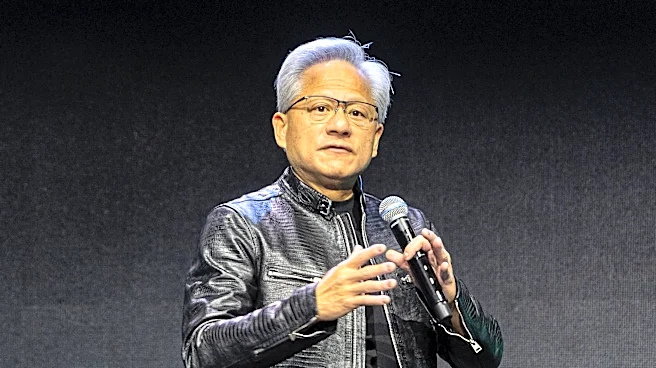
Venture capitalist Jason Calacanis has publicly defended Jensen Huang's reinstatement as CEO of Nvidia, describing Huang as a "hero." Calacanis downplayed the significance of the scandal that led to Huang's resignation, which involved allegations of multiple
extramarital affairs, including one with a woman suspected by U.S. officials of working for Chinese intelligence. These allegations had triggered national security concerns. Huang, who co-founded Nvidia and led it for over three decades, resigned on November 12. The company's board initially appointed Chief Financial Officer Colette Kress as interim CEO and stated on November 17 that they did not intend to reinstate Huang. However, a multifaceted pressure campaign, including intervention from President Trump and support from billionaires like Elon Musk, ultimately led to Huang's return. Calacanis's stance emphasizes the importance of the United States winning the AI race against China, suggesting that Huang's personal conduct is secondary to this strategic objective.
Why It's Important?
Jason Calacanis's defense of Jensen Huang highlights a significant tension within the U.S. tech industry and broader national discourse: the prioritization of perceived national strategic advantage, particularly in AI, over concerns regarding corporate governance, personal conduct, and national security. The allegations against Huang, especially the potential link to Chinese intelligence, raise serious questions about the vulnerability of key U.S. technology leaders to foreign influence. Calacanis's perspective, shared by other prominent figures, suggests a willingness to overlook such concerns in favor of maintaining leadership in critical technological sectors. This situation could set a precedent for how similar issues are handled in the future, potentially influencing corporate accountability standards and the balance between national security interests and the perceived indispensability of certain executives. The involvement of President Trump further underscores the political dimension of high-stakes business leadership in the U.S.
What's Next?
The reinstatement of Jensen Huang as Nvidia's CEO, despite the national security concerns and allegations of personal misconduct, is likely to continue generating debate within the tech industry and political circles. Stakeholders will be watching how Nvidia navigates these issues moving forward, particularly regarding any measures taken to address the national security implications of the alleged intelligence link. The incident may prompt increased scrutiny from government agencies on the personal lives and associations of executives in critical technology sectors. Furthermore, the discussion around "founder mode" and the perceived indispensability of certain leaders could intensify, potentially influencing future corporate succession planning and governance structures. The broader implications for the U.S. strategy in the AI race against China, and how it balances with ethical and security considerations, will also remain a key area of focus.
Beyond the Headlines
The controversy surrounding Jensen Huang's return, and Jason Calacanis's defense of it, delves into deeper ethical and cultural dimensions within the U.S. tech industry. The concept of "hero worship" and "founder mode," as mentioned by Cleo Capital Managing Director Sarah Kunst, suggests a culture where certain powerful male figures may be perceived as exempt from conventional accountability. This narrative is further complicated by the "glass cliff" phenomenon, where women like interim CEO Colette Kress are often placed in leadership during crises and face intense scrutiny or premature replacement. The downplaying of national security concerns in favor of winning the AI race against China also raises questions about the long-term integrity and resilience of U.S. technological leadership. This situation highlights a potential conflict between short-term strategic gains and fundamental principles of corporate ethics, national security, and gender equality in leadership.