



What's Happening?
STMicroelectronics is shifting its focus in robotics from individual semiconductor components to a comprehensive system-level approach, integrating AI, semiconductors, sensors, power electronics, software, and mechanical systems. Allan Lagasca, Smart
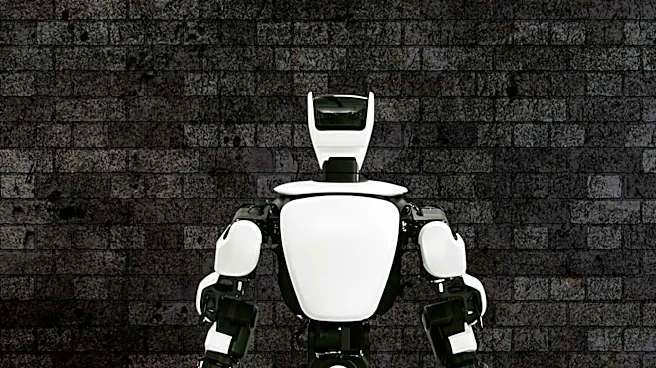
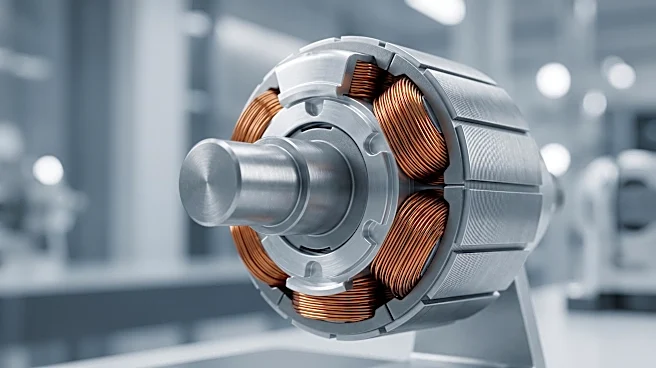
Industrials, Robotics Worldwide Leader at STMicroelectronics, emphasizes that the next phase of robotics, particularly for humanoid robots, requires solving complex integration challenges. The company views robots not as single units but as collections of modules like hands, joints, and processing systems that must work together seamlessly. This strategy addresses the difficulty of making diverse engineering domains (AI, hardware, software) function as one physical system, moving beyond component-centric discussions to understanding and solving customer-specific problems. For instance, STMicroelectronics has demonstrated robotic hands combining motors, cameras, and AI for object recognition, aiming to optimize how chips work together as an integrated system rather than simply increasing the number of chips in a robot.
Why It's Important?
This strategic shift by STMicroelectronics is crucial for the advancement of the U.S. robotics industry and its global competitiveness. By focusing on system-level integration and 'physical AI,' STMicroelectronics is addressing fundamental barriers to the widespread deployment of advanced robotics, including cost, safety, energy efficiency, and supply chain constraints. The emphasis on edge AI, where decisions are processed locally on the robot, is vital for reducing latency and enabling real-time, precise physical interactions, which is critical for applications in manufacturing, logistics, and even domestic settings. This approach could accelerate the development of more capable and reliable robots, potentially leading to increased automation across various U.S. industries. Furthermore, by tackling challenges like cybersecurity and functional safety, STMicroelectronics is contributing to building trust in robotic systems, which is essential for their societal acceptance and integration into human environments. The economic viability of robotics is also a key consideration, with STMicroelectronics working to reduce costs by integrating multiple functions into fewer components, making advanced robotics more accessible to businesses.
What's Next?
The robotics industry is expected to see continued evolution in its architecture, with ongoing developments in how humanoids are designed, how intelligence is distributed, and the standards governing human-robot interaction. STMicroelectronics plans to remain at the forefront of this evolution by actively shaping the architecture of future robotic systems rather than merely supplying components for existing designs. This involves continuous innovation in integrating AI, sensors, and processing capabilities at the edge to ensure fast reactions and complex movements. The company will also likely continue to address the economic challenges of robotics, such as high costs and battery life, through further component integration and power efficiency improvements. Furthermore, as robots become more prevalent, STMicroelectronics will focus on enhancing functional safety and cybersecurity, potentially influencing the development of new industry standards and regulations, including compliance with initiatives like Europe's Cyber Resilience Act. The gradual adoption of useful and safe robotic applications will be key to building public confidence and expanding the market.
Beyond the Headlines
The move towards system-level AI and physical intelligence in robotics by STMicroelectronics has profound implications beyond immediate technological advancements. Ethically, the development of more autonomous and interactive robots necessitates careful consideration of their decision-making processes and potential impact on human employment and safety. The concept of 'physical AI' highlights the growing convergence of artificial intelligence with the physical world, blurring the lines between digital and tangible interactions. This could lead to long-term shifts in how humans interact with machines, requiring new societal norms and legal frameworks. Culturally, the gradual acceptance of humanoid robots in daily life will depend on their perceived utility, reliability, and safety, potentially transforming industries and daily routines. The focus on edge AI also raises questions about data privacy, as more processing occurs locally on devices, reducing the need for centralized data transmission but requiring robust on-device security. Ultimately, STMicroelectronics' strategy is not just about building better robots but about contributing to the fundamental architecture of a future where intelligent machines are seamlessly integrated into society.