








What's Happening?
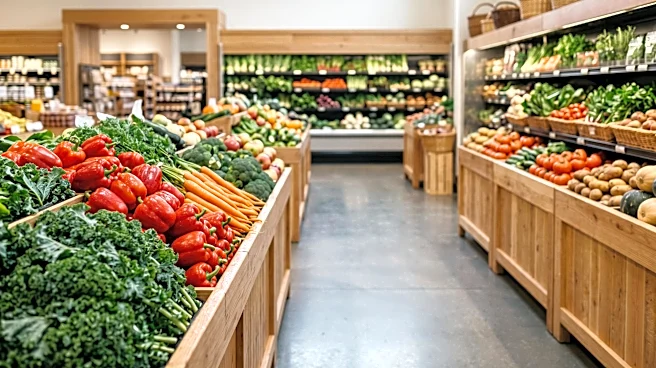
The Detroit People's Food Co-op, a Black-led, community-owned grocery store located on Woodward Avenue in Detroit, is seeking community support after experiencing significant financial strain over the summer. The co-op, which opened two years ago after a 15-year
development process, aims to provide fresh, quality, and healthy food options to the area. General Manager Aaron Orr explained that a series of unfortunate events severely impacted the business. These included reduced foot traffic due to Canadian wildfire smoke and a major incident where a wall of coolers collapsed during a power outage, leading to the complete shutdown of their system and the loss of thousands of dollars' worth of product. The store publicly shared its financial hardships on social media to garner assistance.
Why It's Important?
The Detroit People's Food Co-op's struggle highlights the precarious nature of new businesses, especially those operating with a community-focused mission in underserved areas. The co-op's goal of providing fresh, healthy food options directly addresses issues of food deserts and health disparities in urban communities. Its financial difficulties, exacerbated by unforeseen events like environmental impacts (wildfire smoke) and infrastructure failures (cooler collapse), underscore the vulnerability of small, independent enterprises to external shocks. The community's response, including donations and organized shopping days, demonstrates the vital role of local support in sustaining such initiatives. The co-op's survival is crucial not only for its economic viability but also for its social mission of improving food access and fostering community health in Detroit.
What's Next?
The Detroit People's Food Co-op will continue to rely on community support, including donations and increased patronage, to navigate its financial challenges. General Manager Aaron Orr emphasized the co-op's commitment to demonstrating the value of this support by ensuring the grocery store not only survives but also thrives as a pillar of the community. The ongoing efforts to stabilize its finances will likely involve continued outreach and engagement with local residents, organizations, and potentially broader philanthropic efforts. The co-op's ability to recover will serve as a case study for other community-owned businesses facing similar operational and financial hurdles, particularly in urban environments striving for food equity.
Beyond the Headlines
The situation with the Detroit People's Food Co-op sheds light on the broader systemic issues affecting food access and economic development in marginalized communities. The co-op's mission to provide healthy food options directly challenges the prevalence of food deserts, where residents lack easy access to affordable, nutritious food. The reliance on community support for its survival underscores the limitations of traditional business models in addressing deep-seated social needs and the importance of collective action. This event also highlights the disproportionate impact of environmental factors and infrastructure vulnerabilities on community-led initiatives, which often operate with fewer resources than larger corporations. The co-op's journey reflects a larger narrative of resilience and self-determination within communities striving to build sustainable local economies and improve public health outcomes.