








What's Happening?
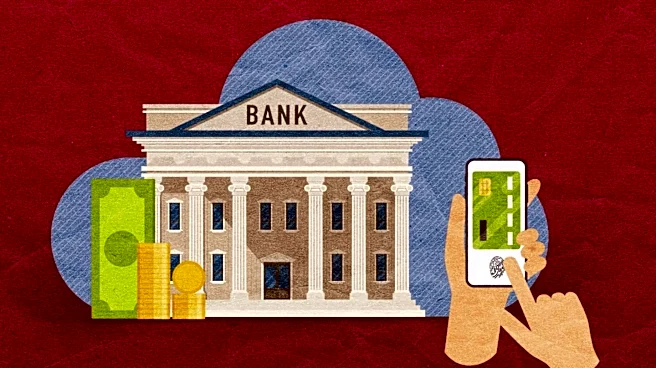
Traditional banks are facing increasing competition from fintech companies that are expanding into core banking services such as mortgages, home equity lines of credit (HELOCs), business banking, and credit cards. Fintechs are gaining market share by
focusing on underserved customer needs and adopting a customer-centric approach to product design. This strategy has allowed them to attract significant deposits and customers, particularly by offering higher interest products and addressing gaps in credit availability that traditional banks often overlooked. The influx of fintechs applying for bank charters further intensifies this competition, signaling a significant shift in the financial landscape. This trend is forcing traditional banks to redefine what constitutes a well-run financial institution, as fintechs demonstrate different growth prospects and efficiency ratios.
Why It's Important?
The rise of fintechs poses a substantial threat to the traditional banking model in the U.S., potentially leading to a re-evaluation of how financial services are delivered and consumed. Traditional banks risk losing market share and deposits if they do not adapt to the customer-centric and technologically advanced approaches of fintechs. The shift of trillions of dollars in deposits towards higher-interest products offered by fintechs highlights a major existential risk for the banking industry. While fintechs excel in digital innovation and customer experience, traditional banks retain a key advantage in relationship banking and local knowledge, particularly community and regional banks. Their ability to make underwriting decisions with judgment and local insight, rather than solely relying on algorithms, remains a unique strength. The ongoing competition will likely drive innovation across the sector, benefiting consumers with more tailored and accessible financial products.
What's Next?
Traditional banks must prioritize modernization and customer-centricity to remain competitive. This involves examining every avenue for improvement, from extending customer service hours to developing more user-friendly digital platforms. While they may not be able to match the user experience of every fintech, banks can still strive to build services that meet customer demands. The increasing number of fintechs obtaining bank charters suggests a future where these companies are no longer considered niche players but direct competitors, necessitating a more aggressive response from established institutions. The industry will likely see continued integration of technology and a greater emphasis on personalized services, potentially leading to hybrid models that combine the strengths of both traditional and fintech approaches.
Beyond the Headlines
The evolving competition between traditional banks and fintechs highlights a broader shift in consumer expectations regarding financial services. Customers increasingly demand convenience, personalized solutions, and seamless digital experiences, pushing all financial institutions to innovate. This transformation also raises questions about regulatory frameworks, as the rapid growth of charter-holding fintechs challenges existing classifications and oversight mechanisms. The emphasis on customer-centricity by fintechs could set a new standard for the entire financial industry, compelling banks to move beyond conventional offerings and address previously underserved segments. The long-term impact could reshape the workforce within banking, requiring new skill sets in technology, data analysis, and digital design, alongside traditional financial expertise.