



What's Happening?
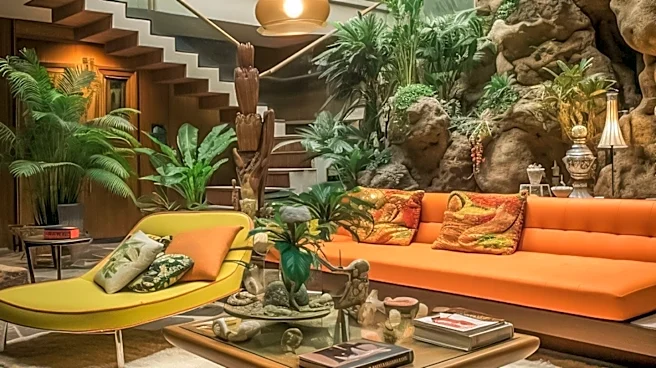
Maximalist layering is gaining popularity as a new interior design trend, moving away from the minimalist styles that have dominated in recent years. This approach involves gradually adding decor to create depth and character in a space, allowing for
personal expression and a sense of evolution over time. Designers like Sophie Garland and Venetia Rudebeck emphasize that maximalist layering is about surrounding oneself with meaningful pieces rather than filling a room. This trend contrasts with minimalism, offering a more textured and inviting aesthetic. The concept of 'layered comfort' merges elements of both maximalism and minimalism, creating spaces that are beautiful, inviting, and cozy through a thoughtful mix of textures and materials.
Why It's Important?
The shift towards maximalist layering reflects a broader cultural move away from perfection and restraint in interior design. After years of minimalist interiors that often prioritized a polished, showroom-like appearance, there is a growing desire for spaces that feel personal, warm, and lived-in. This trend allows individuals to express their personalities through their homes, creating environments that are not only aesthetically pleasing but also emotionally comforting. The approach encourages slow decorating, where rooms evolve over time, making it more accessible and sustainable for homeowners. This change in design philosophy could influence the home decor industry, leading to increased demand for unique, meaningful pieces and a decline in mass-produced, minimalist items.
What's Next?
As maximalist layering continues to gain traction, it is likely to influence future interior design trends and consumer preferences. Homeowners may increasingly seek out unique, artisanal pieces that add character and depth to their spaces. Designers and retailers might respond by offering more personalized and customizable decor options. Additionally, the trend could lead to a resurgence of interest in vintage and antique items, as people look to incorporate pieces with history and meaning into their homes. The emphasis on personal expression and comfort may also drive innovation in home design, with new products and materials emerging to support this evolving aesthetic.