







What's Happening?
The North American market for films used in semiconductor manufacturing is experiencing significant growth, driven by the expansion of domestic semiconductor fabrication capacity in the United States and Canada. These films, which include specialty polymer
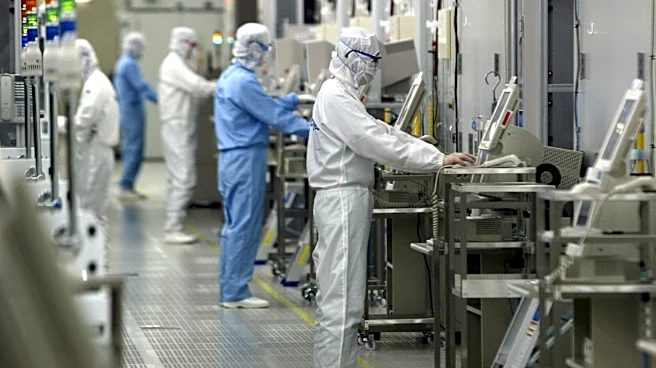
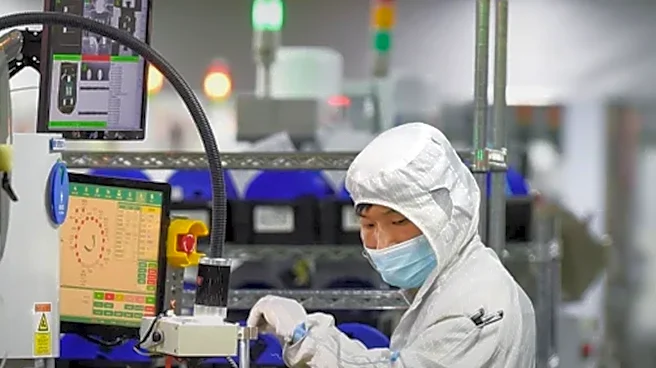
and ceramic films, metalized films, and barrier films, are crucial for processes like photolithography, chemical vapor deposition, etching, and packaging. The demand is fueled by the ongoing scaling of semiconductor nodes (7nm and beyond), the rising need for advanced packaging (2.5D/3D integration), and stricter contamination control requirements. Government policies and incentives, including federal funding and state-level subsidies, are creating a favorable investment climate for film suppliers who align with local content rules and domestic supply chain resilience programs. This has led to a shift towards localized manufacturing capabilities, with capital expenditure directed towards specialized polymer and barrier film production lines, as well as advanced coating and metrology technologies.
Why It's Important?
The growth in North American semiconductor film manufacturing is critical for strengthening the domestic semiconductor supply chain and reducing reliance on offshore suppliers. This localization effort enhances supply chain resilience, mitigating risks associated with geopolitical tensions and global disruptions. For U.S. industries, it means more stable and secure access to essential materials for chip production, which is vital for sectors ranging from automotive to defense. The investment in advanced film production capabilities also fosters technological innovation within North America, particularly in ultra-low-defect, high-purity polymer films and coatings for next-generation lithography. This creates high-value manufacturing jobs and strengthens the region's competitive advantage in the global semiconductor ecosystem, enabling faster response times for film customization and supporting aggressive process nodes.
What's Next?
Future trends indicate sustained growth in demand for semiconductor films, driven by continued node shrinkage and increasing packaging complexity, especially with 2.5D/3D and heterogeneous integration. Technology transformation is expected to accelerate in areas such as multilayer barrier stacks with nanometer precision and low-outgassing coatings compatible with EUV/DUV processes. Product innovation will focus on reducing qualification cycle times and enhancing film compatibility with next-generation deposition tools. Industry consolidation may intensify as customers seek integrated film-systems providers, leading to partnerships that combine materials science, metrology, and service offerings. Capacity expansion is likely to be concentrated near major fabrication centers to minimize logistics risks. Investment opportunities will remain strong, fueled by public funding for domestic fabrication and private capital seeking high-margin film products with durable demand, further solidifying North America's role in the semiconductor supply chain.
Beyond the Headlines
The push for domestic semiconductor film manufacturing has deeper implications beyond immediate supply chain resilience. It signifies a strategic re-evaluation of industrial policy, emphasizing national security and economic sovereignty in critical technology sectors. This trend could lead to a more integrated and self-sufficient North American semiconductor ecosystem, fostering greater collaboration between material suppliers, equipment manufacturers, and chipmakers. Ethically, it raises questions about the environmental impact of increased domestic manufacturing, necessitating a focus on sustainable practices and low-waste processes. Legally, it could lead to new regulations and incentives designed to promote local content and R&D. Culturally, it represents a renewed commitment to advanced manufacturing within the U.S. and Canada, potentially inspiring a new generation of skilled workers and engineers to enter the semiconductor industry, thereby strengthening the region's technological leadership in the long term.