
What's Happening?
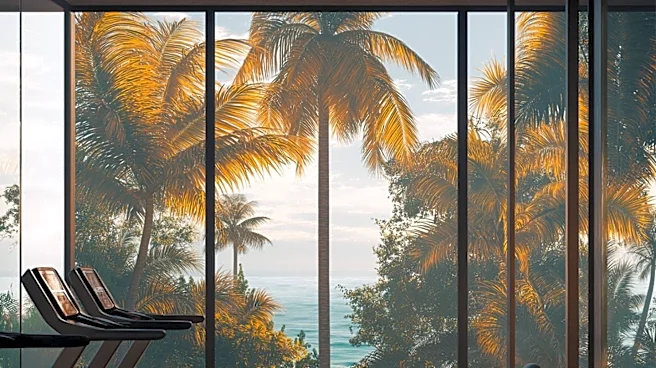
The Canggu region of Bali, Indonesia, has emerged as a significant hub for luxury fitness and wellness, influencing global trends. A decade ago, Canggu had only two gyms; it now boasts over fifteen, with
many opening in the last three years. These establishments, such as House of Kairos, Nirvana Life, and Reload Sanctuary, offer extensive amenities beyond traditional workout spaces, including co-working floors, magnesium pools, recovery areas, and restaurants. Day passes can cost up to $60, and annual memberships reach approximately $2,540. This rapid expansion and upscale offering have transformed the concept of a gym into a comprehensive wellness club, where individuals can spend an entire day combining fitness, work, and social activities. The market is highly competitive, with operators constantly upgrading facilities to outdo rivals, leading to a dynamic and fast-evolving fitness landscape.
Why It's Important?
The evolution of Bali's fitness scene, particularly in Canggu, is important because it sets a new benchmark for the global health and wellness industry. These Balinese clubs are pioneering a 'third place' concept, integrating fitness with social and professional life, which is distinct from traditional gyms. This model, characterized by luxurious facilities and a focus on community, is being observed and emulated in other parts of the world, including Australia, where similar high-end wellness clubs are emerging at significantly higher price points. The trend indicates a shift in consumer expectations, where fitness is no longer a solitary pursuit but a holistic lifestyle experience. This could lead to increased investment in multi-functional wellness centers globally, impacting real estate development, hospitality, and the broader wellness economy. The high cost of entry also suggests a growing market for exclusive, premium health services, potentially widening the gap between accessible and luxury fitness options.
What's Next?
The trend of integrated wellness clubs is likely to continue expanding globally, with more establishments adopting Bali's model of combining fitness, co-working, and social amenities. Developers and investors in the U.S. and other developed nations may increasingly look to replicate this successful formula, leading to the proliferation of luxury wellness centers. This could result in a more competitive landscape for traditional gyms, forcing them to innovate or specialize. Furthermore, the regulatory environment in Bali, such as Perda No. 4 of 2026, which restricts farmland conversion and nominee land ownership, could influence how these developments proceed, potentially leading to more sustainable or controlled growth. The ongoing appreciation of currencies like the Australian dollar against the Indonesian Rupiah also makes these luxury experiences more accessible to international visitors, further fueling demand and investment in the region.
Beyond the Headlines
Beyond the immediate business implications, the rise of these luxury wellness clubs in Bali highlights deeper societal shifts. The concept of a 'third place'—a community hub outside of home and work—is being redefined by these establishments, catering to a demographic seeking connection and a holistic lifestyle. This trend reflects a growing desire for curated experiences that blend personal well-being with social interaction and professional productivity. The high price points and exclusive nature of these clubs also raise questions about accessibility and the potential for creating new forms of social stratification based on wellness consumption. Moreover, the rapid development in areas like Seseh, which were once tranquil rice fields, underscores the tension between economic growth, tourism, and the preservation of local culture and environment. This dynamic interplay between luxury development and local impact will be a critical aspect to monitor as this trend evolves.