







What's Happening?
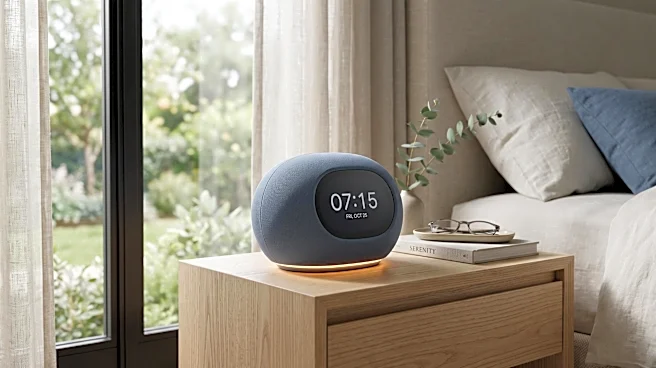
The Hatch Sleep Clock, a popular smart alarm clock, has launched a new model that incorporates contactless sleep tracking. This updated device aims to combine the functions of a sunrise alarm clock, sound machine, and sleep tracker into a single unit.
According to Business Insider, the new Hatch Sleep Clock features a dedicated motion sensor behind its fabric cover, which detects micro-movements and respiration rates overnight. This allows it to track key timing metrics such as bedtime, sleep onset, wake time, and the breakdown of core, REM, and deep sleep stages. Unlike some other sleep trackers, Hatch focuses on actionable behaviors like relaxation, duration, and consistency rather than providing a 'sleep score,' which Chief Product Officer Fiona Biles notes can lead to 'orthosomnia' or an unhealthy obsession with achieving a perfect score. The device is designed to integrate into daily routines to help users wind down and wake up more effectively.
Why It's Important?
The introduction of contactless sleep tracking in a popular bedside device like the Hatch Sleep Clock signifies a growing trend in consumer health technology towards integrated and less intrusive monitoring solutions. This development is important for the U.S. market as it offers consumers an alternative to wearable sleep trackers, potentially appealing to those who prefer not to wear devices during sleep. By focusing on actionable insights rather than just scores, Hatch aims to reduce sleep anxiety and promote healthier sleep habits, which could have a positive impact on public health. The integration of multiple functions into one device also streamlines the user experience, potentially increasing adoption rates and making sleep wellness more accessible to a broader audience. This could influence how other tech companies approach sleep monitoring, pushing for more user-friendly and holistic solutions.
What's Next?
The Hatch Sleep Clock's new feature is expected to influence the competitive landscape of sleep technology. While the current model does not yet include smart wake-up features based on sleep stages, Hatch's Chief Product Officer Fiona Biles has hinted that this is a feature they are working to implement through future software updates. This suggests a continuous evolution of the product, potentially adding more advanced functionalities over time. Consumers will need to decide if the $80 premium over the previous model is justified by the new tracking capabilities, especially considering that full content library access still requires a separate subscription. The success of this integrated approach could encourage other manufacturers to develop similar all-in-one bedside devices, further consolidating the sleep wellness market.
Beyond the Headlines
The shift towards contactless sleep tracking and a focus on behavioral insights rather than mere scores reflects a deeper understanding of user psychology in health technology. Many individuals experience anxiety related to 'perfect' sleep scores, which can paradoxically worsen sleep quality. Hatch's approach to emphasize controllable factors like consistent routines and relaxation techniques addresses this psychological aspect, promoting a more positive relationship with sleep monitoring. This could set a new standard for how sleep technology is designed and marketed, moving away from performance metrics towards holistic well-being. The convenience of a single device for multiple sleep-related functions also highlights a broader trend towards simplifying smart home ecosystems, reducing clutter and enhancing user experience in the pursuit of better health.