





What's Happening?
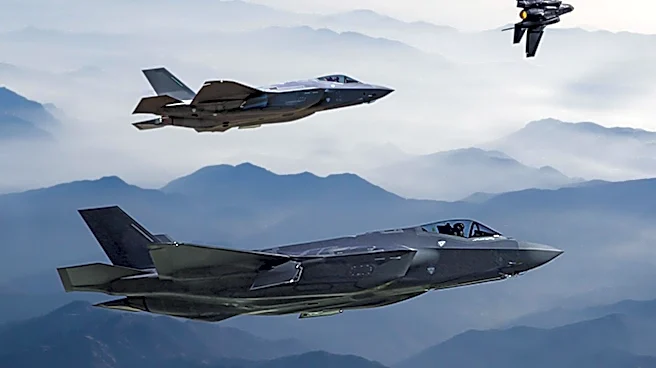
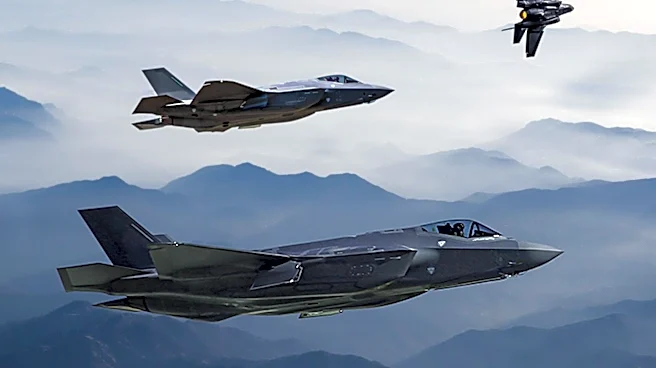
Lockheed Martin, a major U.S. defense contractor, is forecasting high single-digit growth across all four of its business segments for 2027. This projected growth is primarily attributed to the ongoing F-35 sustainment and production programs, as well
as a significant $52.5 billion multiyear award for PAC-3 MSE interceptor missiles. The company, which boasts a third-quarter backlog of $292 billion, providing approximately 3.6 years of revenue visibility, is significantly larger than competitors like L3Harris Technologies, with nearly three times the market cap and employee count. Despite its scale, Lockheed Martin's operating margins, around 10.8% as of the third quarter, are lower compared to some specialized defense electronics firms due to its lead role in massive hardware programs such as the F-35, F-16, C-13, and Sikorsky helicopters.
Why It's Important?
This growth projection for Lockheed Martin is significant for the U.S. defense industry and its economic landscape. The continued demand for F-35 jets and PAC-3 MSE interceptor missiles underscores the U.S.'s ongoing commitment to advanced military capabilities and global security. Such large-scale contracts ensure job stability and economic activity within the defense sector, impacting numerous suppliers and subcontractors across the nation. For investors, Lockheed Martin represents a stable stock with lower price volatility and a higher-yielding dividend, having increased its dividend for 24 consecutive years. However, the company faces risks associated with fixed-price development or production charges and potential impacts from a Democratic-controlled Congress tightening defense spending, which could affect its profitability and future growth trajectory.
What's Next?
Lockheed Martin's management will focus on executing the F-35 sustainment and production contracts and the PAC-3 MSE interceptor missile award to realize the projected high single-digit growth in 2027. The company's ability to manage these large hardware programs efficiently will be crucial, especially given its lower operating margins compared to some industry peers. Future developments could include further contract awards for its established platforms and potential adjustments in its operational strategies to mitigate risks associated with fixed-price contracts. The political climate, particularly any shifts in defense spending policies by a Democratic-controlled Congress, will also be a key factor to monitor, as it could influence the company's financial performance and strategic direction.
Beyond the Headlines
The sustained demand for Lockheed Martin's advanced defense systems, such as the F-35 and PAC-3 MSE interceptors, reflects broader geopolitical trends and the evolving nature of national security. These systems are not merely economic drivers but are integral to U.S. foreign policy and defense posture, influencing international alliances and power dynamics. The ethical implications of arms manufacturing and sales, particularly concerning the deployment of such advanced weaponry, are a constant undercurrent. Furthermore, the reliance on a few large contractors for critical defense programs raises questions about market concentration and potential vulnerabilities in the supply chain. The balance between technological advancement, economic benefit, and ethical considerations remains a complex challenge for both the industry and policymakers.