





What's Happening?
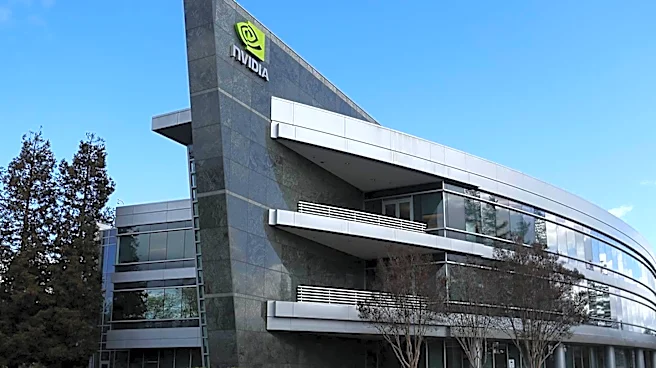
Nvidia is reportedly in discussions to guarantee billions of dollars in debt financing for AI cloud provider Nscale's planned Anthropic data center in West Virginia. This arrangement would involve Nvidia co-signing loans for Nscale, primarily to cover
the electricity and construction costs of the West Virginia campus. Anthropic has already secured a $44.6 billion contract for the first 460-megawatt building at this site, which is slated to utilize Nvidia's next-generation Vera Rubin chips. The companies are also exploring a potential second deal worth approximately $45 billion for an additional building. This move highlights the significant financial backing Nvidia provides to the AI sector, having extended roughly $170 billion in investments and credit support to neoclouds and major customers. Nscale, which aims for a public valuation of up to $35 billion, has faced challenges in project execution, including construction runoff issues at its West Virginia site and Microsoft's withdrawal from a planned Nscale site in England due to power grid delays.
Why It's Important?
This potential co-signing by Nvidia is crucial for Nscale, as it would help secure the necessary financing for its ambitious data center projects, particularly in West Virginia. Nscale has struggled to deploy its planned nearly 500,000 advanced AI chips, with only about 25,000 operational as of August. The financial guarantee from Nvidia would mitigate investor jitters regarding the substantial capital required for AI infrastructure buildout. For Nvidia, this arrangement deepens its financial ties with Nscale and secures a significant customer for its chips, as Anthropic is a major buyer of AI computing power. The success of Nscale's projects, supported by Nvidia, is vital for the broader AI industry's expansion, ensuring the availability of computing resources needed for advanced AI development and deployment. Conversely, if Nscale were to default, Nvidia would temporarily take over the facility, find a buyer, and secure a new tenant, underscoring the high stakes involved for both companies and the AI infrastructure market.
What's Next?
The discussions between Nvidia and Nscale are ongoing, with the outcome determining the financial stability and future trajectory of Nscale's West Virginia AI data center project. Should Nvidia proceed with the residual value guarantee, it would likely facilitate Nscale's ability to secure the necessary debt financing for construction and operational costs. This would enable the deployment of more advanced AI chips and support Anthropic's substantial computing needs. The success of this partnership could also influence investor confidence in other neocloud providers, which have recently experienced significant stock declines. Additionally, the arrangement could set a precedent for how major chip manufacturers support the infrastructure development of their key customers in the rapidly expanding AI sector. The progress of Nscale's IPO, and Anthropic's own financing strategies, will also be closely watched as these developments unfold.
Beyond the Headlines
The potential co-signing arrangement between Nvidia and Nscale reveals a deeper trend in the AI industry: the increasing interdependence between hardware providers and AI cloud service companies. As the demand for AI computing power skyrockets, the financial burden of building and maintaining massive data centers becomes immense. This situation forces chipmakers like Nvidia to move beyond traditional supplier roles and become active financial enablers for their customers. This shift could lead to more integrated ecosystems where hardware, software, and infrastructure are tightly linked, potentially accelerating AI development but also concentrating risk. The ethical implications of such deep financial ties could include questions about market dominance and fair competition, as smaller players might struggle to secure similar backing. Furthermore, the environmental impact of these energy-intensive data centers, as evidenced by the runoff issues at Nscale's West Virginia site, will continue to be a critical concern, prompting scrutiny over sustainable development practices in the AI infrastructure boom.