




What's Happening?
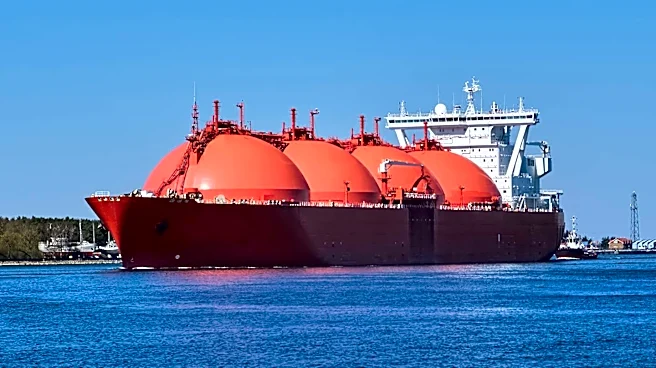
Spain recommenced its purchases of Russian liquefied natural gas (LNG) in October, following a one-month pause. Data released on November 10 by the Spanish energy company Enagas indicates that Spain imported 2,086 GWh of LNG from Russia during the month.
This figure represents nearly double the amount imported in October 2025, which was 1,078 GWh. Russian gas constituted 6.4% of Spain's total LNG imports for October. On an annual basis, the share of Russian gas in Spain's imports has reached 14%, an increase from less than 11% during the same period last year. The United States remained the largest supplier of gas to Spain in October, accounting for 44.3% of imports, followed by Algeria with 30.6%, and Portugal with 6.9%. Russia was the fourth-largest supplier.
Why It's Important?
This resumption of Russian LNG imports by Spain highlights the complex energy landscape in Europe, particularly as nations balance energy security with geopolitical considerations. While Spain's Foreign Minister Jose Manuel Albares previously announced intentions to ban Russian LNG supplies from January 1, 2027, the current imports underscore the ongoing reliance on Russian energy, even amidst such declarations. The significant increase in Russian LNG imports compared to the previous year suggests a continued demand that alternative sources may not yet fully meet. For the U.S., which is Spain's largest gas supplier, this situation could present both opportunities and challenges. It reinforces the U.S.'s role as a key energy provider to Europe but also indicates the persistent competition from Russian supplies. The broader European context involves efforts to diversify energy sources and reduce dependence on Russia, making Spain's actions a point of interest in the evolving energy strategy of the continent.
What's Next?
Despite the recent resumption of imports, Spain's Foreign Minister Jose Manuel Albares has stated plans to ban Russian LNG supplies starting January 1, 2027, even for existing contracts. This indicates a future shift in Spain's energy policy, aiming to completely phase out Russian LNG. Spain's significant LNG storage and processing capabilities are expected to play a crucial role in this transition, potentially allowing it to assist other European nations in securing gas supplies from alternative, reliable partners. The coming months will likely see Spain actively working towards diversifying its energy portfolio and strengthening its relationships with non-Russian suppliers to meet its 2027 target. The impact of this planned ban on Spain's energy market and its role in European energy security will be closely watched.
Beyond the Headlines
The fluctuating nature of Spain's Russian LNG imports, despite stated political intentions, reveals the intricate balance between economic pragmatism and geopolitical objectives in energy policy. The reliance on Russian gas, even temporarily, underscores the deep-seated energy dependencies that many European nations face. This situation also brings to light the potential for energy to be used as a political tool and the challenges in rapidly transitioning to alternative sources. The ethical dimension involves the dilemma of supporting a nation through energy purchases while simultaneously condemning its actions on the international stage. Furthermore, the long-term implications for global energy markets could include increased investment in LNG infrastructure and a re-evaluation of energy security strategies worldwide, as countries seek to avoid similar vulnerabilities in the future.