



What's Happening?
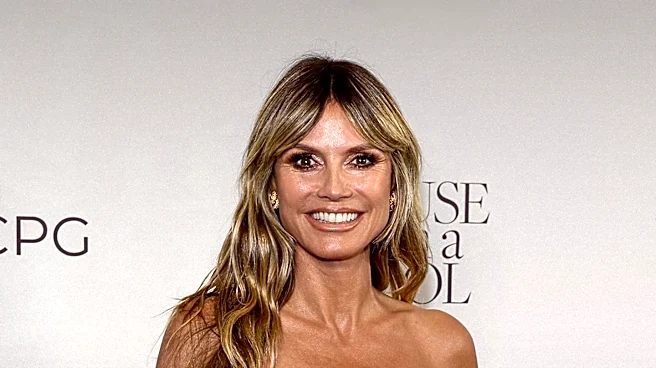
Supermodel Heidi Klum has publicly stated her disinterest in weight-loss drugs, asserting that she 'looks better bigger.' This declaration comes at a time when the fashion industry and social media are witnessing a resurgence of the ultra-thin aesthetic,
partly fueled by celebrity discussions around GLP-1 medications. Klum, who built her career as a prominent supermodel and Victoria's Secret Angel, shared her evolving perspective on body image, noting that she has gained weight over the years and now wears a larger jean size. She recounted past criticisms about her weight despite being a size 24 and 5-foot-9-and-a-half, highlighting the unrealistic standards prevalent in the industry. Her husband also reportedly encouraged her to eat more, suggesting she looked better with 'more meat on her bones.' Klum's comments challenge the prevailing narrative that equates thinness with beauty and success, offering a refreshing counter-perspective from someone deeply entrenched in the beauty industry.
Why It's Important?
Heidi Klum's stance is significant because it directly confronts the re-emerging ultra-thin beauty ideal, which has profound implications for public health and body image, particularly among women and young girls in the U.S. The widespread discussion and use of GLP-1 weight-loss drugs among celebrities contribute to a culture that increasingly valorizes a specific, narrow body type, potentially undermining years of progress made by the body positivity movement. Klum's voice, as a highly recognizable figure who has navigated intense scrutiny over her appearance for decades, carries substantial weight. Her rejection of these drugs and her embrace of a larger, healthier physique can serve as a powerful message of self-acceptance and realism. This can help counteract the pressure on individuals to conform to potentially unhealthy beauty standards, fostering a more inclusive understanding of what constitutes a 'beautiful' or 'healthy' body. It also highlights the ongoing struggle against societal pressures that dictate women's bodies should remain perpetually youthful and thin.
What's Next?
Klum's comments may spark further dialogue within the fashion and entertainment industries regarding body diversity and the ethical implications of promoting weight-loss solutions as beauty enhancements. It could encourage other public figures to share their perspectives, potentially leading to a more balanced conversation about body image and health. Brands and media outlets might face increased pressure to feature a wider range of body types and to be more transparent about the use of weight-loss interventions among their talent. For the public, particularly younger generations, Klum's message could foster greater self-acceptance and critical thinking about the beauty standards presented in media. This could also influence consumer choices, potentially shifting demand towards brands that genuinely embrace body diversity and away from those that perpetuate narrow ideals. The long-term impact could be a gradual but significant shift in cultural perceptions of beauty, moving towards authenticity and health over an idealized, often unattainable, thinness.
Beyond the Headlines
Beyond the immediate impact on beauty standards, Klum's statement touches upon deeper societal issues concerning aging, self-worth, and the commercialization of the female body. Her acknowledgment that bodies change with age and that 'bigger' can indeed be 'better' challenges the pervasive anti-aging narrative that often dictates women's lives. This perspective encourages a more holistic view of health and beauty, one that values well-being and natural progression over constant striving for an idealized, youthful physique. The conversation also implicitly raises questions about the role of pharmaceutical companies and the medical community in shaping beauty ideals through the availability and promotion of weight-loss drugs. It highlights the ethical tightrope walked by industries that profit from body insecurities. Ultimately, Klum's candidness contributes to a broader cultural re-evaluation of what it means to be 'healthy' and 'beautiful,' advocating for a more compassionate and realistic approach to body image in an increasingly appearance-obsessed world.