



What's Happening?
General Motors (GM) is intensifying its efforts to develop self-driving technology for personal vehicles by hiring talent from leading autonomous vehicle (AV) companies. Rashed Haq, GM's Vice President of Autonomous Vehicles, stated that the company is attracting
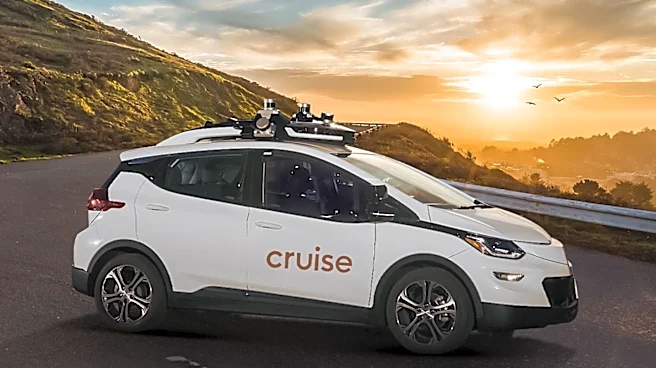
engineers from top AV competitors to create self-driving technology accessible to millions of GM customers. The automaker aims to introduce 'eyes-off' driving capabilities on highways by 2028, starting with the Cadillac Escalade IQ. This initiative follows GM's decision to shut down its Cruise robotaxi venture in 2024, redirecting resources towards personal vehicle autonomy. Key hires include former executives and engineers from companies like Tesla, Waymo, and Zoox, as GM seeks to leverage its large customer base, manufacturing capabilities, and data from its Super Cruise driver-assistance system.
Why It's Important?
GM's push into self-driving technology represents a significant shift in the automotive industry, as it seeks to make autonomous driving accessible to a broader market. This move could position GM as a leader in the AV space, challenging competitors like Tesla and Waymo. The development of affordable self-driving technology could revolutionize personal transportation, offering increased convenience and safety for consumers. Additionally, GM's strategy to use lidar sensors, which it claims provide a 'material advantage,' could set a new standard in the industry. The success of this initiative could lead to widespread adoption of autonomous vehicles, impacting urban planning, traffic management, and reducing the need for human drivers.
What's Next?
GM plans to continue expanding its autonomy team and refining its self-driving technology, with a target to achieve 'eyes-off' driving by 2028. The company will focus on testing and ensuring the safety and reliability of its systems, drawing lessons from its previous Super Cruise and Cruise projects. As GM progresses, it may face competition from other automakers like Ford and Rivian, who are also targeting similar timelines for their autonomous technologies. The outcome of these developments could influence future regulatory frameworks and consumer acceptance of self-driving cars.