






What's Happening?
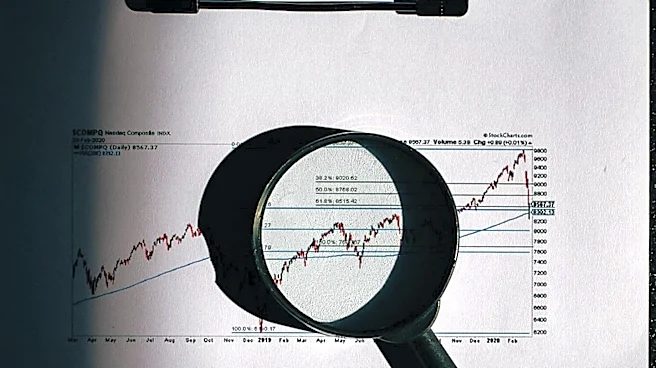
Recession indicators are crucial tools for identifying potential economic downturns in the U.S. These indicators are categorized into leading, coincident, and lagging. Leading indicators, such as new orders, business expectations, financial conditions,
housing measures, and changes in credit demand, tend to shift before broader economic activity. While they offer early clues, they can also produce false signals. Coincident indicators, including employment, income, production, and spending, reflect the current state of the economy. Lagging indicators, like unemployment, typically change after economic conditions have already shifted, making them less effective for real-time recession identification. The Sahm Rule, which tracks significant increases in the unemployment rate, and yield curve inversions, where short-term Treasury yields exceed long-term yields, are also key indicators. Historically, yield curve inversions have preceded every U.S. recession since 1955. The unemployment rate, a vital coincident indicator, tends to accelerate its rise once it begins to increase meaningfully, rarely experiencing a 'soft landing.'
Why It's Important?
Understanding these recession indicators is vital for U.S. industries, policymakers, and economic stakeholders as they provide early warnings and insights into the economy's health. For businesses, leading indicators can inform strategic decisions regarding investment, hiring, and production, potentially mitigating the impact of a downturn. Policymakers use these signals to consider timely interventions, such as monetary policy adjustments or fiscal stimulus, to stabilize the economy. A rising unemployment rate, for instance, directly impacts consumer spending and confidence, which are significant drivers of economic activity. The reliability of indicators like the Sahm Rule and yield curve inversions, which have historically predicted recessions, underscores their importance in economic forecasting. Ignoring these signals can lead to delayed responses, exacerbating economic challenges and increasing the severity of a recession. Conversely, accurate interpretation can help stakeholders prepare and adapt, potentially softening the blow of an economic contraction.
What's Next?
Economists and financial analysts will continue to closely monitor these indicators for sustained trends. Any further inversion of the yield curve or a significant increase in the unemployment rate, particularly if it triggers the Sahm Rule, would likely intensify discussions about an impending recession. Businesses may begin to adjust their hiring plans, inventory levels, and investment strategies in anticipation of weaker demand. Policymakers, including the Federal Reserve, will likely scrutinize these data points to inform future interest rate decisions and other monetary policy actions. The ongoing evaluation of these indicators will shape market sentiment and influence consumer and business confidence. The focus will be on whether current economic weaknesses are temporary fluctuations or the beginning of a more prolonged downturn, prompting various stakeholders to prepare for different economic scenarios.
Beyond the Headlines
The reliance on these economic indicators highlights a broader challenge in economic forecasting: distinguishing between temporary slowdowns and genuine recessionary signals. The complexity of the U.S. economy, with its millions of businesses and consumers, means that no single indicator provides a complete picture. The interplay between leading, coincident, and lagging indicators, along with other factors like inflation and credit conditions, creates a dynamic and often unpredictable economic landscape. The psychological impact of recession warnings can also be significant, influencing consumer behavior and business investment, potentially creating self-fulfilling prophecies. Therefore, the interpretation and communication of these indicators by experts and media play a crucial role in shaping public perception and economic outcomes. The ongoing debate about the accuracy and timeliness of these indicators underscores the continuous evolution of economic analysis and the inherent uncertainties in predicting future economic cycles.