







What's Happening?
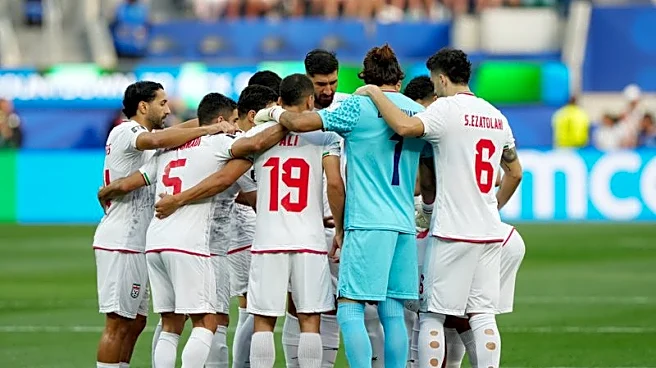
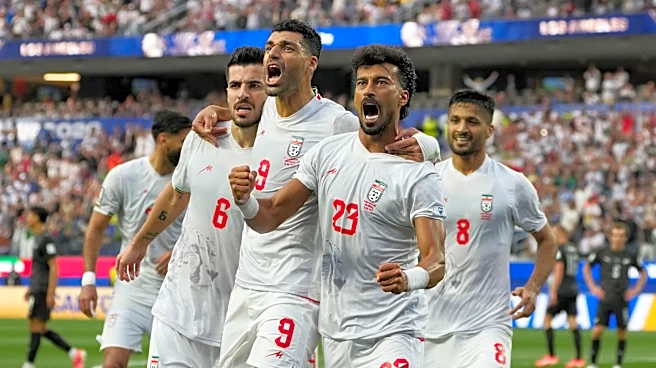
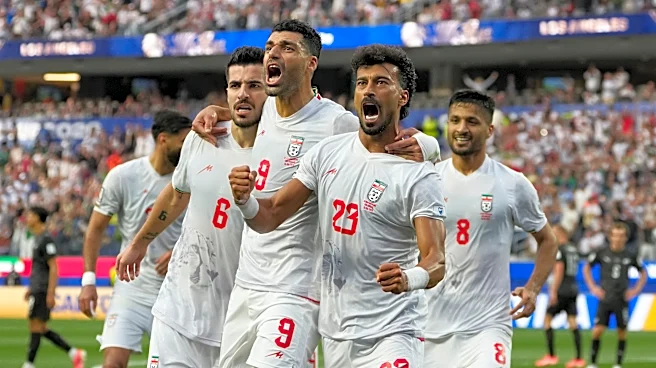
The Iranian national soccer team, participating in the World Cup, is facing stringent visa conditions imposed by the United States. According to Andrew Giuliani, the executive director of the White House FIFA Task Force, the team is required to leave
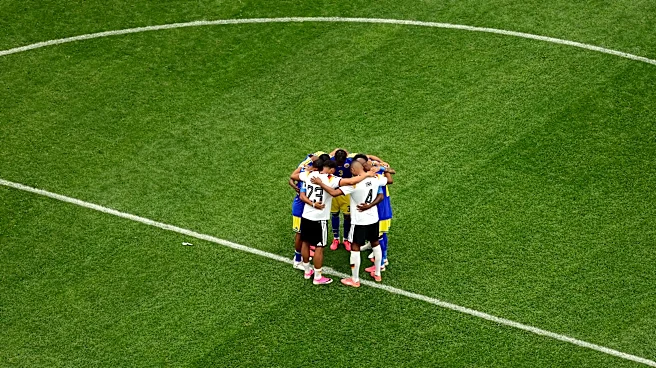
the U.S. within hours after each match. This decision follows a politically charged game against New Zealand in Los Angeles, amid ongoing tensions related to the U.S.-Israel conflict with Iran. The Iranian team, known as Team Melli, had to return to their base camp in Mexico shortly after their match, which has drawn criticism for not allowing adequate recovery time. Additionally, Iranian winger Mehdi Torabi faced visa issues, but the U.S. Department of State resolved the matter by issuing a new multiple-entry visa. Some support staff and officials were denied entry due to alleged ties to Iran's Islamic Revolutionary Guard Corps.
Why It's Important?
The U.S. visa restrictions on the Iranian soccer team highlight the intersection of sports and international politics. These measures reflect broader geopolitical tensions, particularly the U.S.'s stance on Iran amid ongoing conflicts. The restrictions could impact the team's performance due to limited recovery time, potentially affecting their World Cup journey. This situation underscores the challenges faced by international sports teams when political issues influence logistical arrangements. The U.S.'s handling of the situation may also affect diplomatic relations and perceptions of fairness in international sports events.
What's Next?
The Iranian team will continue to navigate these visa conditions as they participate in upcoming matches in the U.S. The situation may prompt further diplomatic discussions or adjustments in logistics to accommodate the team's needs. Stakeholders, including FIFA and international sports bodies, might engage in dialogue to address the implications of such restrictions on the integrity of the tournament. The U.S. may also face scrutiny from international observers regarding its approach to balancing security concerns with sports diplomacy.