





What's Happening?
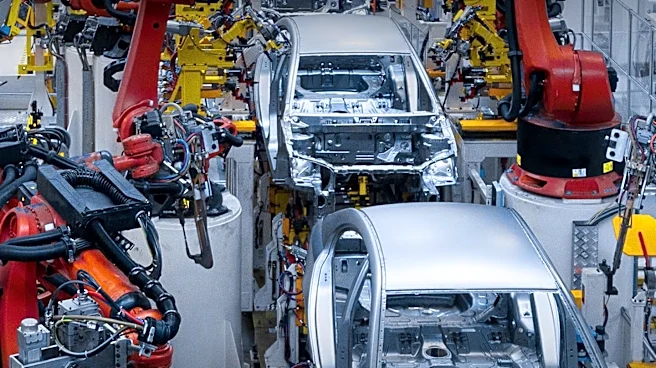
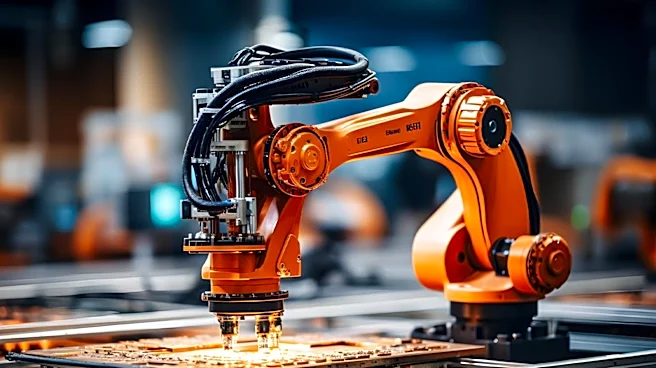
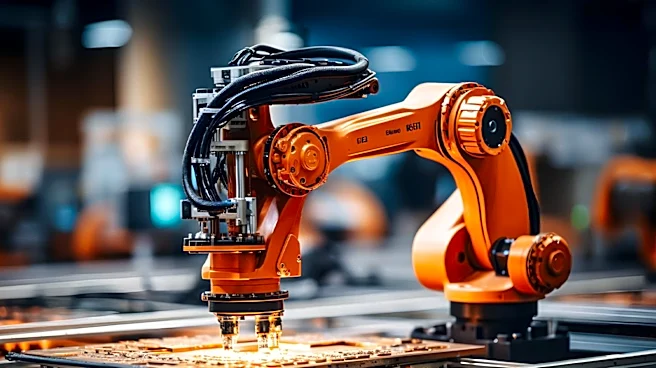
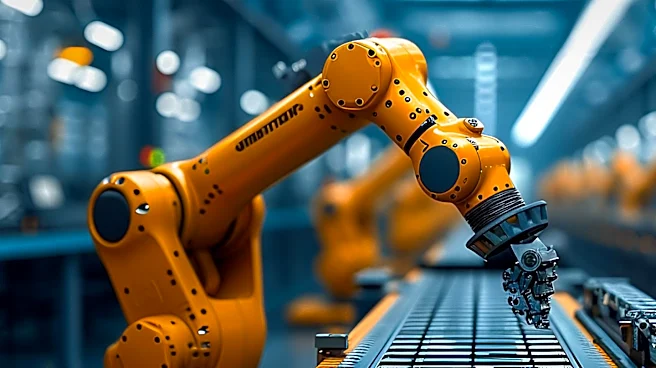
The manufacturing sector is emerging as a primary testing ground for physical AI, which involves machines interacting with the real world rather than just digital environments. Physical AI applications in manufacturing include AI-powered visual inspection
for defect detection, predictive maintenance to prevent downtime, autonomous mobile robots for material handling, and real-time safety monitoring. While these pilot programs show promise in improving quality, throughput, and safety, scaling them across multiple plants and geographies faces significant hurdles. The core issue is connectivity; physical AI relies on continuous, low-latency data exchange among sensors, machines, robots, and edge systems. Standard Wi-Fi often proves inadequate in industrial settings due to interference, patchy coverage, and inconsistent latency, which can turn a performance problem into a safety concern on fast-moving production lines. Organizations are finding that the infrastructure needed to connect data and execute intelligence in real-time is the primary constraint, rather than the AI models themselves.
Why It's Important?
The successful scaling of physical AI in manufacturing holds substantial economic implications for the U.S. and global industries. Businesses stand to gain higher throughput, better product quality, safer operations, and reduced operating costs. The ability to implement AI for tasks like predictive maintenance and visual inspection can significantly cut down on scrap, rework, and unplanned downtime, leading to increased efficiency and profitability. However, the current connectivity gap, particularly the limitations of existing network architectures, poses a significant barrier to realizing these benefits. Underestimating the infrastructure requirements can prevent promising AI pilots from ever reaching full production, hindering technological advancement and competitive advantage. This challenge highlights a critical need for investment in robust, low-latency network solutions like private 5G and edge computing to support the demands of real-time physical AI operations.
What's Next?
To overcome the scaling challenges, manufacturers must prioritize infrastructure design from the outset, rather than treating connectivity as an afterthought. This involves defining business outcomes first and then working backward to determine the necessary data, connectivity, and compute resources. Organizations need to carefully select infrastructure, such as private 5G, Wi-Fi, fiber, edge, and cloud solutions, based on factors like latency, device mobility, data sensitivity, and resilience. Designing for production, including built-in security and replicability across multiple sites, is crucial. Furthermore, connecting the entire operational ecosystem—networks, data, applications, IT, and OT systems—with clear ownership and human oversight is essential. The focus will shift towards organizations that build their infrastructure to reliably carry data and execute intelligence wherever work happens, rather than those accumulating disconnected proofs of concept.
Beyond the Headlines
The transition of physical AI from pilot to production signifies a deeper shift in how enterprises interact with artificial intelligence. It moves AI beyond screen-based analysis to active, real-world engagement, sensing conditions and responding in real-time. This evolution raises critical considerations beyond mere technological implementation. The emphasis on sovereign or private AI, particularly in regions like Asia-Pacific, underscores growing concerns about intellectual property protection, supply chain resilience, and control over operational data. This suggests a broader trend towards localized and secure AI deployments, reflecting geopolitical and economic anxieties. The readiness gap between intent and action in adopting sovereign AI highlights a fundamental challenge in modernizing industrial infrastructure to meet the demands of advanced AI, pointing to a need for strategic, long-term infrastructure investments that integrate security and scalability from the ground up.