




What's Happening?
The traditional hot dog is undergoing a luxurious transformation, with upscale restaurants and venues across the U.S. offering versions adorned with high-end ingredients like caviar, Wagyu beef, and 24-karat edible gold. These gourmet hot dogs are commanding
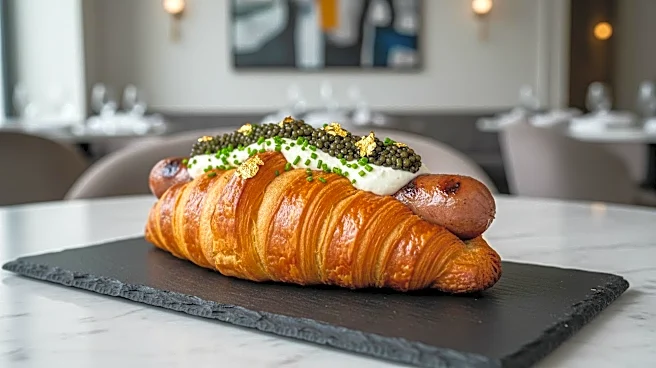
prices up to $100. For instance, Miami-based Golden Goat's 'Golden Glizzy' features an Australian Wagyu hot dog topped with crème fraîche, mascarpone, 30 grams of Golden Goat Classic Ossetra caviar, chives, and 24-karat edible gold flakes, served on Ficelle Bakery croissant dough, priced at $100. This item reportedly sold out at events like the Formula One Miami Grand Prix and Miami Open tennis tournament. Similarly, The Bar Room at The Modern in New York City's Museum of Modern Art offers two mini Wagyu hot dogs with pickled shallots, a fried egg sauce, and caviar for $39. Even Breckenridge Ski Resort in Colorado offers a $60 'Mega Hot Dog Tower' with six all-beef hot dogs, six sauces, and waffle fries, aiming for an over-the-top, shareable experience.
Why It's Important?
This trend signifies a notable shift in the U.S. culinary landscape, where comfort food staples are being elevated to luxury items. It reflects a growing consumer segment willing to pay premium prices for unique, experiential dining, even for traditionally inexpensive foods. The success of these high-priced hot dogs at major events like the Miami Grand Prix indicates a market for 'experiential luxury' where novelty and exclusivity drive demand. This could influence food service industries to innovate and diversify their offerings, potentially leading to more upscale versions of everyday foods. For consumers, it expands the definition of what constitutes a 'gourmet' meal, blurring lines between casual and fine dining. The high price points also highlight a widening gap in consumer spending habits, with some seeking extreme indulgence while others focus on affordability.
What's Next?
The success of these luxury hot dogs may encourage other establishments to experiment with similar high-end versions of popular, accessible foods. This could lead to a broader trend of 'gourmet comfort food' across various U.S. cities and events. We might see more collaborations between luxury food brands and casual dining venues, aiming to capture the attention of affluent consumers and social media users. The demand for visually appealing and unique food experiences, amplified by social media, is likely to continue driving innovation in this niche market. Additionally, as these items gain traction, there could be increased scrutiny on the value proposition of such expensive offerings, potentially sparking debates about food accessibility and luxury consumption.
Beyond the Headlines
The emergence of $100 hot dogs points to deeper cultural and economic shifts. It reflects a society where status symbols are increasingly found in ephemeral experiences and consumable goods, rather than just traditional luxury items. The 'Golden Glizzy' and similar offerings are not just about taste; they are about the story, the exclusivity, and the social media shareability. This trend also highlights the power of branding and perceived value, where common ingredients are transformed into premium products through presentation and association with luxury events. It raises questions about consumer psychology and the pursuit of novelty in an affluent society, where the ordinary is constantly being reimagined as extraordinary. This could also be seen as a form of 'democratized luxury,' where a taste of opulence is made accessible through a familiar, albeit highly embellished, food item.