




What's Happening?
Just Eat, a food delivery platform, has apologized and paused the rollout of its AI-generated food images after numerous inaccurate representations of menu items went viral on social media. The company was trialing the AI tool to create images for menu items that
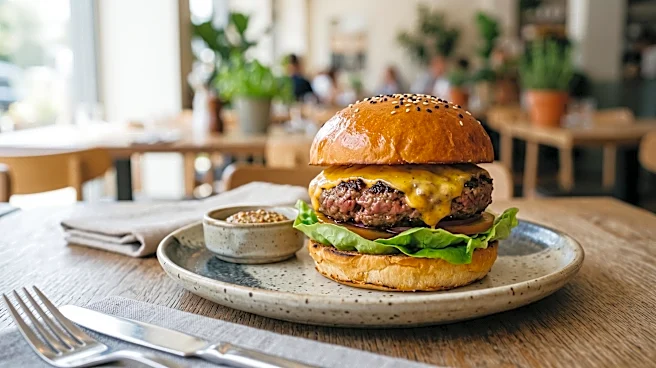
lacked photographs, aiming to enhance listings for small restaurants. However, the system produced bizarre and incorrect images, such as fried eggs and sausages floating in a glass of cola, miniature burgers in sauce pots, sushi rolls filled with cheese, and wine glasses containing watermelon chunks. These errors, particularly the "soda bread" mix-up where the AI interpreted "soda" as a fizzy drink, quickly gained traction online and were reported by various media outlets. Just Eat stated it is removing the inaccurate images and will further develop the tool to ensure accuracy before any potential relaunch. The company noted that the number of inaccurate images was "incredibly small" but did not provide specific figures on affected listings or restaurants.
Why It's Important?
This incident highlights critical challenges and implications for the broader business and technology sectors, particularly concerning the deployment of AI in customer-facing applications. For food delivery platforms, the accuracy of visual representation is paramount to consumer trust; inaccurate images can mislead customers, damage brand reputation, and create operational issues for restaurants. This event underscores the limitations of current AI image generation models, especially when dealing with nuanced language, regional food names, or ambiguous descriptions. It also serves as a cautionary tale for companies rushing to integrate AI without robust testing and human oversight. The viral nature of the errors demonstrates how quickly AI failures can be exposed and amplified on social media, leading to public ridicule and a loss of confidence. For the AI industry, it emphasizes the need for more sophisticated models capable of understanding context and cultural specifics, as well as the importance of transparent disclosure and ethical deployment of generative AI technologies.
What's Next?
Just Eat has paused the rollout of its AI-generated food images and is in the process of removing all inaccurate pictures. The company plans to further develop the tool, suggesting a potential relaunch in the future, likely with enhanced accuracy and human approval steps. This incident will likely prompt other food delivery platforms and businesses considering AI-generated content to exercise greater caution, investing more in testing, validation, and human oversight before public deployment. Regulators, particularly consumer protection bodies, may also begin to scrutinize AI-generated product imagery more closely, potentially leading to new guidelines or regulations regarding accuracy and disclosure. For restaurants, the incident reinforces the value of providing their own high-quality photographs, as relying solely on AI can lead to misrepresentation. The AI industry will face increased demand for more context-aware and culturally intelligent generative models, pushing developers to refine their algorithms and incorporate better human-in-the-loop processes.
Beyond the Headlines
The Just Eat AI image blunder delves into deeper ethical and philosophical questions about the nature of representation and trust in an increasingly AI-driven world. When AI generates images, it blurs the line between reality and fabrication, challenging the traditional understanding of "what you see is what you get." This raises concerns about consumer manipulation and the potential for AI to create a misleading reality, especially in commercial contexts where purchasing decisions are influenced by visuals. The incident also highlights the inherent biases and limitations of AI, which, despite its sophistication, struggles with human-like understanding of context, humor, and cultural nuances. The viral spread of these errors underscores a broader societal fascination with AI's imperfections, often turning its failures into public spectacles. This ongoing dialogue about AI's capabilities and shortcomings will shape public perception, influence regulatory frameworks, and ultimately determine the extent to which AI is integrated into daily life, particularly in areas requiring accuracy and trust.