








What's Happening?
Journaling is being recognized as an effective method to help children express and understand their feelings, particularly as they often struggle to articulate complex emotions. Unlike adults who have more practice in naming internal states, children may
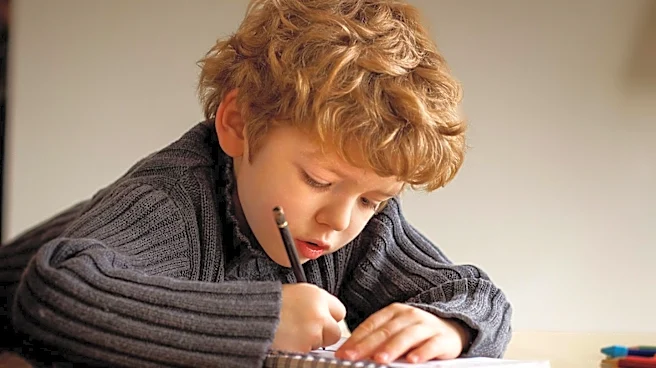
find it challenging to explain what they are experiencing. Journaling offers an alternative communication channel, allowing children to write, draw, or use prompts to convey their thoughts and feelings without the pressure of perfect verbal articulation. This practice helps children connect emotions to specific experiences, such as feeling angry because a sibling entered their room without asking. By providing a private space, journaling allows children to sort through their emotions without immediate adult intervention or judgment, fostering honesty and self-discovery. The approach emphasizes flexibility, encouraging children to engage with journaling in ways that suit their age and preferences, whether through extensive writing, simple lists, or drawings.
Why It's Important?
The development of emotional literacy in children is crucial for their overall well-being and future success in the U.S. society. Journaling provides a foundational tool for this, enabling children to build a richer emotional vocabulary and understand the nuances of their feelings. This is particularly significant in an era where mental health challenges among youth are a growing concern. By offering a non-judgmental outlet, journaling can help prevent emotional suppression and foster healthy coping mechanisms from a young age. For parents and educators, it offers insights into a child's inner world, potentially highlighting issues that might otherwise go unnoticed. The ability to connect emotions to experiences, as facilitated by journaling, can lead to improved communication within families and schools, and better support systems for children. This practice can contribute to raising a generation that is more emotionally intelligent and resilient, impacting social interactions and academic performance positively.
What's Next?
The integration of journaling into children's daily routines and educational settings is a foreseeable next step. This could involve schools incorporating journaling exercises into their curriculum to promote emotional awareness and self-expression. Parents may also be encouraged to introduce journaling at home, with resources and guidance on how to make it an engaging and beneficial activity for different age groups. The development of child-friendly journals, prompts, and creative tools is likely to expand, making the practice more accessible and appealing. There will also be a continued focus on educating adults on how to respond to children's journal entries, emphasizing listening and curiosity over immediate problem-solving, to maintain the journal as a safe space. Furthermore, the role of journaling in therapeutic contexts for children dealing with emotional or behavioral issues may see increased exploration and implementation.
Beyond the Headlines
The long-term implications of widespread journaling among children extend to fostering a more empathetic and self-aware society. By learning to process their emotions internally, children develop a stronger sense of self and an improved capacity for self-regulation. This can lead to reduced instances of conflict, enhanced problem-solving skills, and a greater appreciation for diverse emotional experiences. Ethically, it reinforces the importance of a child's inner world and their right to privacy in processing personal thoughts. Culturally, it could shift societal norms towards openly acknowledging and discussing emotions, moving away from the suppression often seen in adult communication. The practice also subtly teaches children that feelings are transient and can be examined, rather than being overwhelming or permanent, contributing to greater mental fortitude and resilience throughout their lives. This foundational emotional work in childhood can have profound effects on adult relationships and overall societal harmony.