









What's Happening?
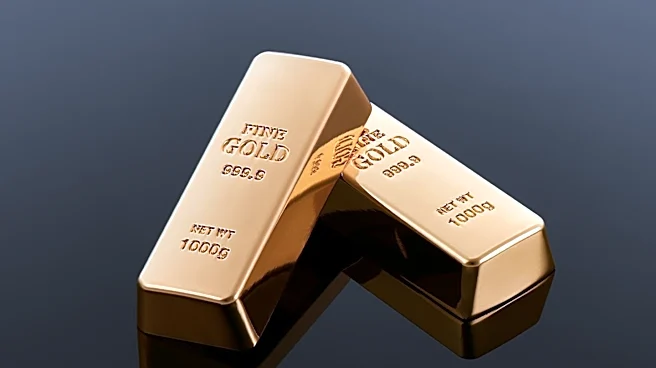
Gold prices have increased by over 1% as investors adjust their expectations regarding future interest rate hikes by the Federal Reserve. This rise marks the first weekly gain for gold in five weeks, driven by softer-than-expected U.S. jobs data. Spot
gold prices reached $4,179.94 per ounce, while U.S. gold futures for August delivery rose to $4,193.20. The weaker-than-expected nonfarm payrolls and private payrolls data have tempered concerns about inflation and prolonged high interest rates, leading to a decrease in the dollar's value and making gold more attractive to investors.
Why It's Important?
The increase in gold prices reflects broader market reactions to economic indicators and monetary policy expectations. As a traditional safe-haven asset, gold often benefits from economic uncertainty and lower interest rates, which reduce the opportunity cost of holding non-yielding assets. The shift in investor sentiment regarding Federal Reserve rate hikes could influence broader financial markets, affecting investment strategies and economic forecasts. This development also highlights the interconnectedness of labor market data, monetary policy, and commodity prices in shaping economic conditions.
What's Next?
Market participants will continue to monitor economic data and Federal Reserve communications for further insights into the trajectory of interest rates. Any changes in inflation trends or labor market conditions could prompt adjustments in monetary policy expectations, impacting gold prices and other financial assets. Additionally, central banks' gold purchasing activities, as reported by the World Gold Council, may influence future price movements. Investors will need to remain vigilant in assessing the balance between economic growth prospects and inflationary pressures.