


What's Happening?
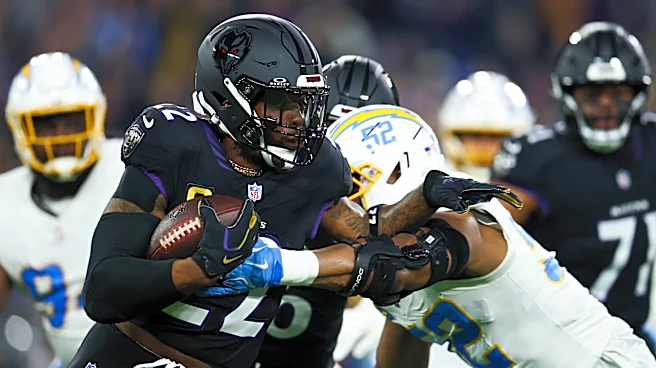
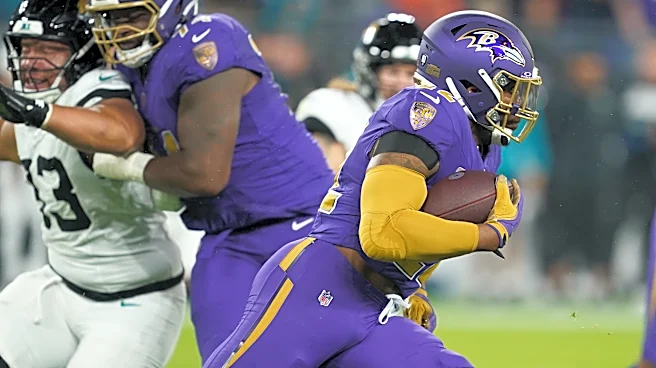
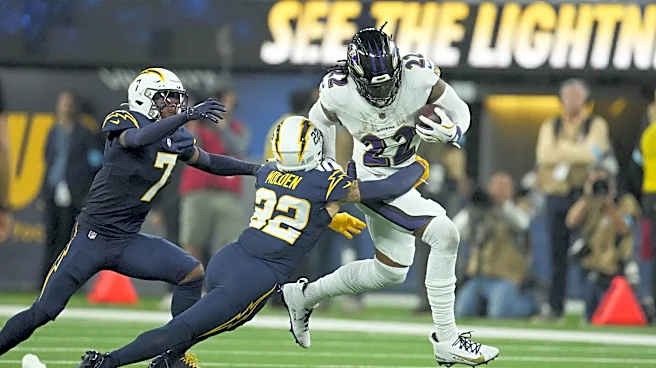
Derrick Henry, the Baltimore Ravens' star running back, saw his impressive streak of 33 consecutive prime-time games with at least 25 rushing yards come to an end. This streak, which was tied with Ezekiel Elliott for the longest in NFL history, concluded
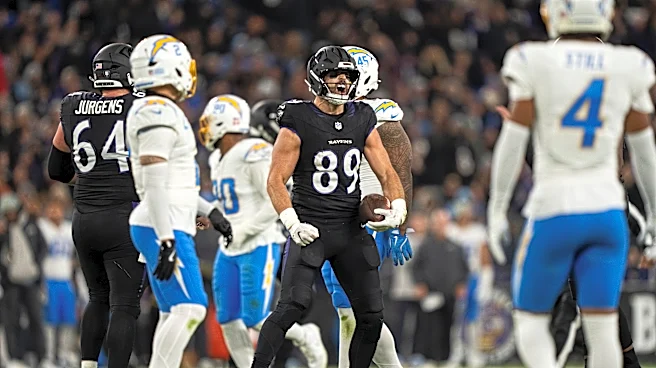
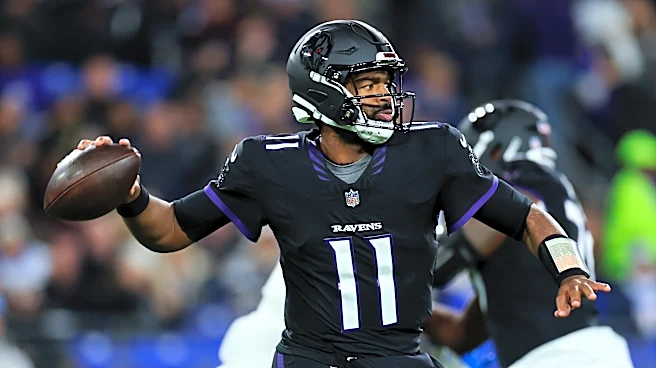
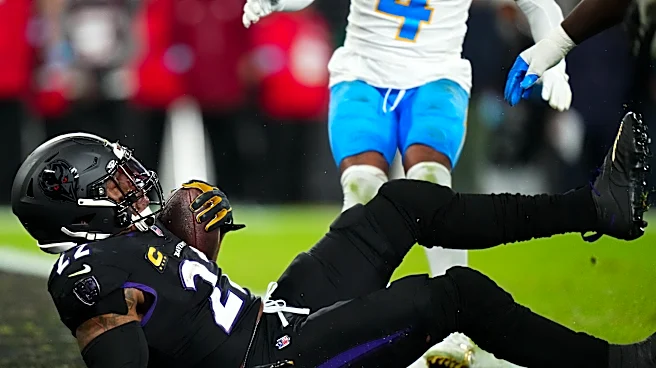
during a Monday Night Football game against the Los Angeles Chargers. In that game, Henry managed only 10 rushing yards on 10 carries, a significant underperformance for a player known for his dominance. This marks a notable decline for Henry, who has now rushed for less than 60 yards in five consecutive games. The Ravens ultimately lost the game 23-20. Factors contributing to his reduced production include a struggling offensive line that has not effectively created running lanes, and defenses loading the box to stop him, especially with quarterback Lamar Jackson recovering from thumb surgery. Additionally, changes in the Ravens' offensive scheme under new offensive coordinator Declan Doyle, moving towards a more finesse-style offense, have impacted Henry's power running game.
Why It's Important?
The end of Derrick Henry's historic rushing streak highlights broader concerns within the NFL regarding player longevity, offensive scheme adaptability, and the impact of supporting cast on star performance. For the Ravens, Henry's struggles are critical as he is a central component of their offensive strategy. His diminished output could force the team to re-evaluate its offensive identity and play-calling, potentially shifting away from a run-heavy approach. This situation also underscores the challenges faced by veteran running backs in maintaining elite performance levels in a physically demanding league. The decline in Henry's yards per carry and overall rushing efficiency could influence future contract negotiations for other high-profile running backs, as teams may become more cautious about investing heavily in players at this position. Furthermore, the offensive line's inability to create space for Henry points to a systemic issue that could affect the Ravens' playoff aspirations and overall competitiveness in the AFC.
What's Next?
The Baltimore Ravens will need to address the issues contributing to Derrick Henry's reduced production, including the performance of their offensive line and the effectiveness of their new offensive scheme. Head coach Jesse Minter and offensive coordinator Declan Doyle will likely face increased scrutiny regarding their play-calling and personnel decisions. If Henry's struggles continue, the Ravens may need to explore alternative offensive strategies or consider increasing the workload of other offensive players. For Henry, the focus will be on adapting to the current offensive environment and finding ways to regain his form. His performance in upcoming games will be crucial in determining the long-term outlook for both him and the Ravens' offense. The team's ability to adjust and support Henry will be a key factor in their success for the remainder of the season.
Beyond the Headlines
Derrick Henry's situation extends beyond mere statistics, touching upon the evolving philosophy of NFL offenses and the valuation of running backs. The shift towards more finesse-oriented offenses, as seen with the Ravens, reflects a league-wide trend where passing games often take precedence. This development raises questions about the future role of traditional power running backs and whether teams will continue to invest significant resources in them. The challenges Henry faces, including a less dominant offensive line and a scheme that doesn't fully leverage his strengths, could serve as a case study for how even elite players can be marginalized by systemic changes. It also highlights the ethical considerations of team management, particularly regarding personnel decisions like not re-signing key offensive linemen or fullbacks, and their direct impact on player performance and team dynamics. The long-term implications could see a further de-emphasis on the running back position in favor of more versatile offensive weapons.