






What's Happening?
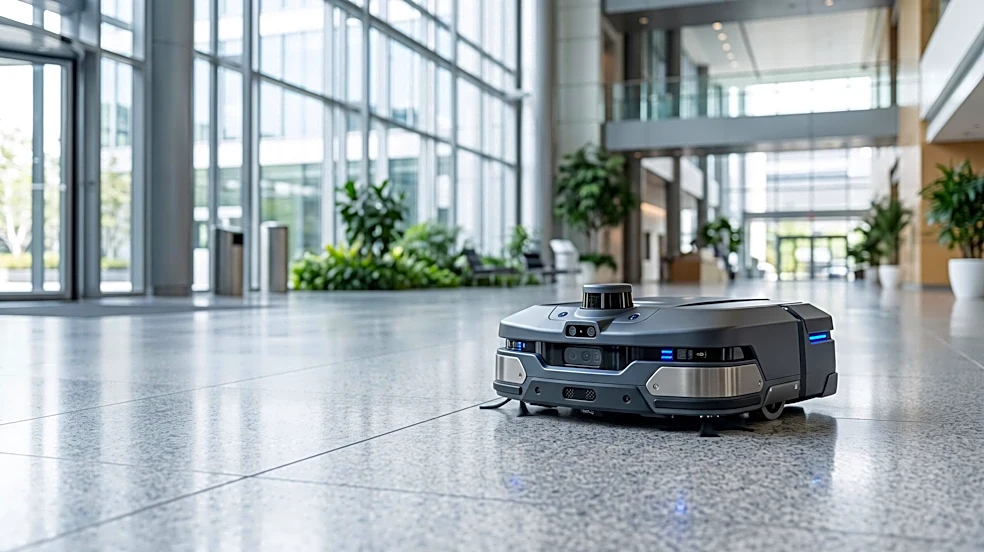
Tennant Company, a global leader in cleaning solutions headquartered in Eden Prairie, Minnesota, has introduced its first autonomous robotic vacuum, the P1 VAC. This new product expands Tennant's robotics portfolio beyond hard-floor solutions into the soft-floor
cleaning category. The P1 VAC is designed to automate routine vacuuming, sweeping, and dust mopping tasks in commercial environments, aiming to provide consistent cleanliness and increase productivity. It features intelligent navigation and sensing technologies for safe operation in dynamic settings, along with repeatable cleaning routes. The P1 VAC is the inaugural model in Tennant's new P-Series, which focuses on making robotic cleaning more accessible and practical for everyday commercial use. The company plans to introduce 10 new products within 24 months to build a $250 million robotics equipment business by 2028.
Why It's Important?
The launch of the P1 VAC signifies a significant advancement in the commercial cleaning industry, particularly in the U.S. market. As businesses face ongoing labor challenges and increasing demands for cleanliness, autonomous cleaning solutions offer a way to maintain standards while optimizing existing labor resources. This technology allows staff to focus on higher-value tasks like guest services and occupant support, thereby improving overall operational efficiency and customer experience. For the U.S. business sector, this innovation can lead to cost savings, enhanced hygiene protocols, and a more consistent quality of service in various commercial settings, including offices, retail spaces, and hospitality venues. Tennant's strategic investment in robotics also positions it as a key player in the evolving landscape of automated facility management, potentially influencing industry standards and adoption rates of similar technologies.
What's Next?
Tennant Company is set to continue its aggressive expansion in the robotics market, with plans to introduce nine more products in its P-Series within the next two years. This will likely lead to a broader range of autonomous cleaning solutions tailored for different commercial applications and price points. The company's goal of achieving a $250 million robotics equipment business by 2028 suggests a strong commitment to this segment, which could drive further innovation and competition in the automated cleaning sector. Businesses in the U.S. can expect to see increased availability and adoption of robotic cleaning technologies, potentially leading to shifts in labor allocation and operational strategies within facility management. The success of the P1 VAC will be a key indicator for the future trajectory of Tennant's robotics division.
Beyond the Headlines
The introduction of autonomous cleaning robots like the P1 VAC reflects a broader societal trend towards automation and artificial intelligence in everyday tasks. While addressing immediate business needs like labor shortages and efficiency, it also raises deeper questions about the future of work and the evolving roles of human employees. The shift of human staff from routine cleaning to 'guest services, occupant support, sanitation, and other responsibilities where people add the most value' highlights a potential redefinition of labor, emphasizing human-centric roles that require empathy, problem-solving, and direct interaction. This technological advancement could lead to a more specialized workforce and a greater demand for skills that complement automation, ultimately reshaping the nature of employment in service industries and prompting discussions about workforce training and adaptation in an increasingly automated economy.