







What's Happening?
Lockheed Martin has announced significant advancements in the production of its GMLRS (Guided Multiple Launch Rocket System) rockets, a crucial weapon system for the U.S. Army and its allies. The company has delivered its 100,000th GMLRS rocket and is
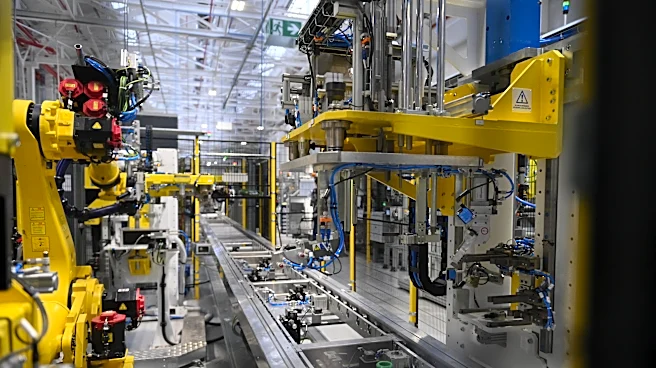
now producing nearly 14,000 rockets annually, a rate achieved ahead of schedule. This accelerated production addresses the growing demand for proven, battlefield-ready systems. Additionally, Lockheed Martin, in collaboration with General Dynamics Ordnance and Tactical Systems (GDOTS), successfully completed the first test of a new solid rocket motor for GMLRS. This test is a step towards establishing a third domestic source for a key component, aiming to enhance supply chain resilience. These milestones were recognized during a ceremony in Camden, Arkansas, highlighting continued investment in U.S. military readiness, American manufacturing, and the defense industrial base. GMLRS rockets are precision strike weapons known for their low cost, reduced collateral damage, and rapid deployability from M270 and HIMARS launchers.
Why It's Important?
These production milestones are critical for bolstering U.S. national security and supporting allied defense capabilities. The increased output of GMLRS rockets directly addresses the urgent need for these combat-proven precision strike weapons, ensuring that U.S. forces and their international partners have the necessary resources to maintain military readiness. The collaboration with General Dynamics Ordnance and Tactical Systems to establish a new domestic source for solid rocket motors is vital for strengthening the defense industrial base. This diversification of the supply chain reduces reliance on single suppliers, mitigating potential disruptions and ensuring a more robust and resilient production capacity. For the U.S. economy, this initiative supports American manufacturing, creates jobs, and fosters investment in critical defense technologies. The GMLRS program involves over 200 suppliers across 35 states, with more than 50 designated as small businesses, indicating a broad economic impact. The investment in employee training and hiring, particularly from local schools in Camden, Arkansas, also contributes to regional economic development and workforce skill enhancement.
What's Next?
Continued testing of the new solid rocket motor is planned, with qualification expected in 2027. This will pave the way for integrating the third domestic source into the GMLRS supply chain, further enhancing production capacity and resilience. Lockheed Martin is also actively investing in its Camden, Arkansas facility, hiring 50% more employees to support accelerated production across various munitions programs, including PAC-3 MSE and PrSM. The company's ongoing efforts include employee training and hiring initiatives, such as providing funding for an Industrial Automation and Robotics Lab and a high school hiring program that has placed over 40 graduating students in full-time roles. These initiatives are designed to sustain and further accelerate munitions production to meet global demand. The focus will remain on delivering these critical weapon systems with urgency, ensuring that U.S. and allied forces are equipped with advanced capabilities.
Beyond the Headlines
The accelerated production of GMLRS rockets and the strategic diversification of the supply chain reflect a broader shift towards enhancing the resilience and responsiveness of the U.S. defense industrial base. This move is likely influenced by geopolitical events and the increasing demand for advanced weaponry, underscoring the importance of domestic manufacturing capabilities. The emphasis on establishing multiple domestic sources for critical components highlights a proactive approach to national security, aiming to prevent vulnerabilities that could arise from over-reliance on single points of failure in the supply chain. Furthermore, the investment in workforce development and local communities, through initiatives like the high school hiring program and educational funding, demonstrates a commitment to long-term sustainability and growth within the defense sector. This approach not only secures immediate production needs but also cultivates a skilled labor force essential for future technological advancements and maintaining a competitive edge in global defense. The GMLRS program's success could serve as a model for other defense programs seeking to optimize production and strengthen supply chain integrity.