




What's Happening?
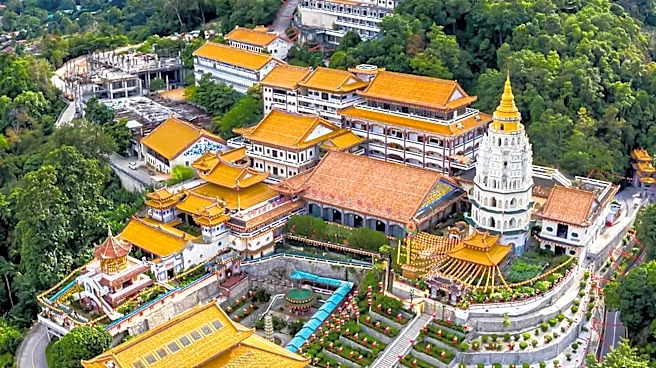
Penang, Malaysia, has been identified as the world's most budget-friendly city for digital nomads, according to a new international study. The study, conducted by digital marketing agency Click Intelligence and published in Moneywise, evaluated 26 cities
across 15 countries. Penang secured the top position with an overall score of 0.78. Following Penang, Busan, South Korea, ranked second, and Kuala Lumpur, Malaysia, placed third. Other cities in the top five included Fukuoka, Japan, and Seoul, South Korea. The study highlighted Penang's estimated monthly cost of living, including rent, at approximately €850 (RM3,860), emphasizing its affordability, reliable internet connectivity, safety, and access to Malaysia's DE Rantau Pass. The DE Rantau Pass is a program designed for eligible remote workers, allowing them to reside in Malaysia for 12 months with an option for renewal. James Owen, co-founder and director of Click Intelligence, noted that English is widely spoken on the island, minimizing language barriers, and Malaysia is generally considered a safe country.
Why It's Important?
This recognition is significant for Penang as it reinforces its growing appeal as a prime destination for digital nomads and international visitors. For the U.S. digital nomad community, this study provides valuable insights into cost-effective international living and working options, potentially influencing their relocation decisions. The affordability, coupled with robust internet infrastructure and safety, makes Penang an attractive alternative to more expensive global hubs. This trend could lead to a broader dispersion of U.S. remote workers seeking better quality of life and lower living expenses abroad. For Malaysia, this ranking validates its efforts to bolster its tourism and creative economy sectors, attracting a demographic that contributes to local economies through spending on housing, food, and services. The DE Rantau Pass further demonstrates Malaysia's proactive approach to integrating digital nomads into its economic framework, offering a structured pathway for extended stays.
What's Next?
The international recognition is expected to further boost Penang's tourism and creative economy industries. Penang Tourism and Creative Economy Committee chairman Wong Hon Wai stated that the ranking reflects the state's appeal and reinforces government efforts in these sectors. The state government will likely leverage this study in its promotional campaigns to attract more digital nomads and international visitors. This could lead to increased investment in infrastructure supporting remote work, such as co-working spaces and improved internet services. Other cities and countries may also take note of Penang's success, potentially leading to increased competition in offering attractive packages and visas for digital nomads. For U.S. digital nomads, this could mean more diverse and appealing options for international remote work in the future, as more destinations vie for their presence.
Beyond the Headlines
The rise of cities like Penang as top destinations for digital nomads signifies a broader global shift in work culture and economic priorities. This trend highlights the increasing importance of remote work as a viable long-term career path, moving beyond its initial perception as a temporary solution. The emphasis on affordability, safety, and connectivity underscores the evolving demands of the modern workforce, which prioritizes flexibility and cost-efficiency. This shift also presents ethical considerations regarding the impact of an influx of digital nomads on local economies and cultures, including potential gentrification and changes in local cost of living. Furthermore, the development of specific digital nomad visas, like Malaysia's DE Rantau Pass, indicates a growing governmental acknowledgment of this demographic's economic contributions, prompting a re-evaluation of traditional immigration and work permit policies worldwide.