




What's Happening?
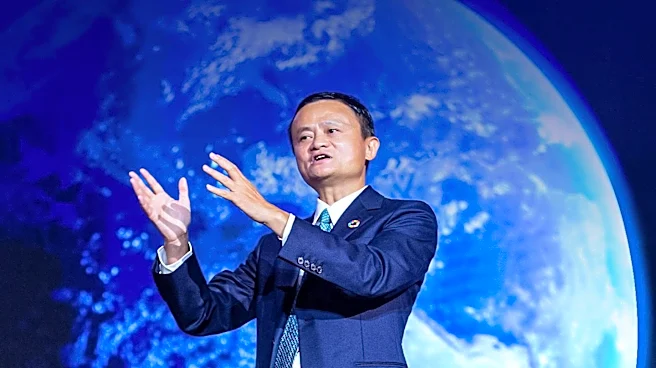
Alibaba Group founder Jack Ma recently visited the offices of the company's chip design unit, T-Head, on November 26. This visit comes as T-Head is pursuing a planned spin-off and a Hong Kong listing. Social media posts cited by Sina Technology reported
Ma's rare appearance, where he cheerfully greeted staff and posed for photos. Employees expressed surprise and excitement at seeing Ma in person. Alibaba had previously announced on November 10 that the Hong Kong stock exchange confirmed T-Head could proceed with its proposed listing. T-Head submitted a confidential listing application on September 11, intending to issue shares through a Hong Kong public offering and an institutional placement. The specifics regarding the amount to be raised, offering arrangements, and Alibaba's post-listing stake are yet to be determined, though T-Head is expected to remain an Alibaba subsidiary.
Why It's Important?
This development is significant for Alibaba's strategic direction and its presence in the global semiconductor industry. The spin-off and listing of T-Head highlight Alibaba's commitment to its chip business, aiming to unlock value and potentially secure independent funding for further research and development. Jack Ma's personal visit, despite his reduced public profile in recent years, signals strong support for T-Head's initiatives and could boost investor confidence in the unit's future. The move also underscores the increasing importance of self-sufficiency in chip technology, particularly for Chinese tech giants, amidst global supply chain uncertainties and geopolitical tensions surrounding semiconductor access. A successful listing could provide T-Head with the capital needed to compete more effectively with established chipmakers and advance its proprietary technologies, such as the Zhenwu 810E AI chip.
What's Next?
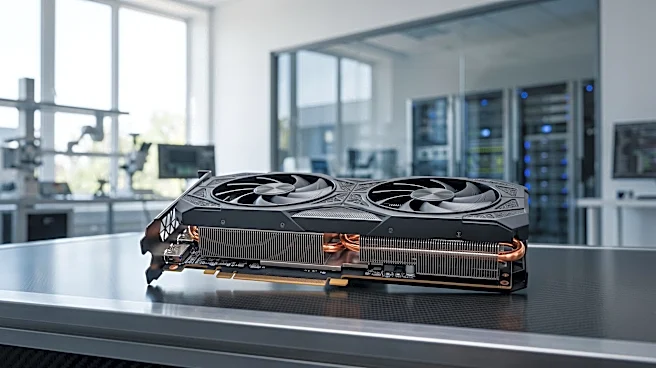
The next steps for T-Head involve finalizing the details of its Hong Kong listing, including the amount to be raised and the offering arrangements. Following the listing, T-Head will likely focus on expanding its market presence and further developing its chip technologies. The company's Zhenwu 810E AI chip, which reportedly surpasses some US and Chinese GPU performance benchmarks, could see increased adoption in AI training, inference, and autonomous driving sectors. Alibaba will continue to hold a stake in T-Head, indicating a sustained strategic interest in the chip business. The success of T-Head's listing and subsequent performance will be closely watched as an indicator of investor appetite for Chinese semiconductor firms and Alibaba's broader restructuring efforts.
Beyond the Headlines
The spin-off of T-Head reflects a broader trend among large technology conglomerates to unbundle their diverse business units to enhance focus and unlock shareholder value. For Alibaba, this move could streamline its operations and allow T-Head to operate with greater agility in the highly competitive semiconductor market. Furthermore, the emphasis on self-developed hardware and software, as seen with the Zhenwu PPU, highlights China's strategic push for technological independence in critical sectors. This initiative could have long-term implications for the global technology landscape, potentially reducing reliance on foreign chip manufacturers and fostering a more robust domestic semiconductor ecosystem. The success of T-Head could also serve as a model for other Chinese tech companies looking to spin off specialized units.