







What's Happening?
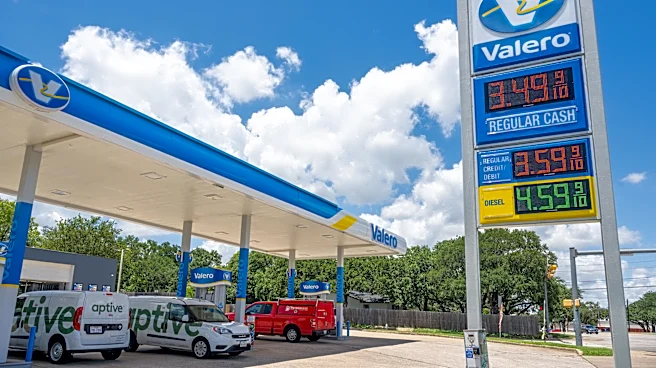
Average gas prices in South Carolina have decreased by more than 15 cents per gallon over the past week, according to a recent GasBuddy survey. As of Monday morning, the statewide average price stands at $3.45 per gallon. This figure represents a nearly
55-cent drop from one month ago, though it remains over 77 cents higher than prices recorded one year prior. The lowest price observed in the state was $3.03 per gallon, while the highest reached $5.29. Patrick De Haan, head of petroleum analysis at GasBuddy, attributes this decline primarily to seasonal shifts, including fading demand due to cooler weather and increased output from refiners completing maintenance. De Haan noted that gas prices have historically fallen in the month leading up to an election every year since 2006, with the exception of 2010, suggesting that while political attention may be on affordability, the current relief at the pump is driven by seasonal factors.
Why It's Important?
The recent decline in South Carolina gas prices offers immediate financial relief to consumers and businesses in the state. Lower fuel costs can translate into reduced transportation expenses for individuals, potentially freeing up disposable income for other goods and services. For businesses, particularly those reliant on logistics and transportation, this decrease can lead to lower operating costs, which might be passed on to consumers through stable or reduced prices, or contribute to improved profit margins. The trend also reflects broader national seasonal patterns in the energy market, where demand typically softens with the onset of cooler weather, and refinery operations stabilize post-maintenance. This economic shift can influence consumer spending habits and business investment decisions, impacting the overall economic landscape of South Carolina and potentially serving as an indicator for national trends.
What's Next?
Foreseeable consequences include continued monitoring of gas prices by consumers and businesses, with potential for further fluctuations based on global oil markets, refinery output, and seasonal demand. While the current decline is attributed to seasonal shifts, the upcoming election could bring increased political focus on energy affordability, potentially influencing future policy discussions related to fuel costs. Stakeholders such as transportation companies, retailers, and individual commuters will likely adjust their budgets and spending in response to these price changes. The stability or continued decline in gas prices could also impact inflation rates, a key economic indicator closely watched by policymakers and the public. Any significant geopolitical events or disruptions to oil production could quickly reverse the current downward trend.
Beyond the Headlines
The consistent pattern of gas price declines leading up to elections, as noted by GasBuddy, highlights a fascinating interplay between market dynamics and political cycles. While the immediate cause is seasonal, the observation that prices tend to fall before elections, with only one exception in nearly two decades, suggests a potential, albeit indirect, influence of political sentiment or anticipation on market behavior, or at least a correlation that warrants deeper analysis. This phenomenon could shape public perception of economic management during election periods, regardless of the underlying market forces. It also underscores the broader challenge of energy affordability, a recurring theme in U.S. politics that transcends immediate market fluctuations and touches upon long-term energy policy, infrastructure, and environmental considerations. The reliance on seasonal shifts for price relief also points to the inherent volatility and external dependencies of the energy sector.