






What's Happening?
The Peterson Institute for International Economics (PIIE) announced the passing of Gary Clyde Hufbauer, a long-standing senior fellow, on November 4. Hufbauer was a foundational figure at the Institute, contributing significantly to its intellectual legacy,
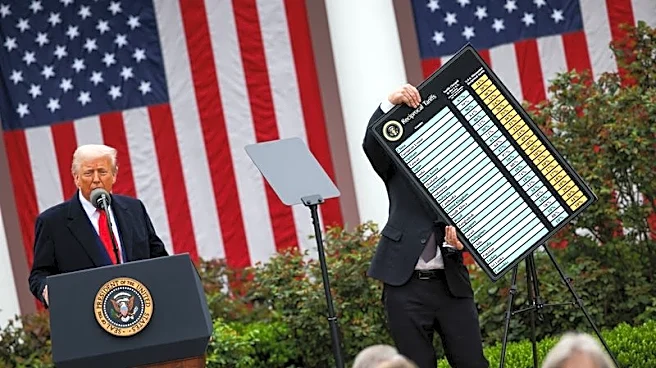
policy influence, and international standing since its early days. His extensive work covered international trade, tariffs, free trade agreements—notably NAFTA—economic sanctions, and corporate taxation. Hufbauer remained actively engaged in economic research and public policy until his final days, with his most recent analysis on President Trump's tariff reversals published just eight days before his death. He was recognized for his intellectual engagement, passion for improving the policy world, independence, collegiality, and commitment to applying economic research to global challenges. His mentorship of numerous research assistants and analysts who went on to successful careers is also a notable part of his legacy.
Why It's Important?
Gary Clyde Hufbauer's contributions were pivotal in shaping discussions and policies within international economics. His research provided critical insights into complex global trade issues, influencing generations of scholars and policymakers. His work on tariffs and trade agreements, such as NAFTA, helped lay the groundwork for understanding the economic impacts of such policies. The PIIE, a prominent institution in international economic policy, benefited immensely from his expertise and dedication, solidifying its reputation as a leading research body. His passing represents a significant loss to the field of international economics, as his unique blend of rigorous scholarship and practical policy engagement will be missed. His legacy underscores the importance of independent, evidence-based economic analysis in informing public policy decisions and fostering global economic understanding.
What's Next?
The Peterson Institute for International Economics will continue its mission of providing independent economic analysis, building upon the foundational work laid by scholars like Gary Clyde Hufbauer. The Institute will likely honor his legacy through continued research in the areas he championed, such as international trade, tariffs, and economic sanctions. His extensive body of work will remain a valuable resource for economists, policymakers, and students seeking to understand global economic dynamics. The PIIE's commitment to intellectual engagement and policy impact, values Hufbauer embodied, will guide its future endeavors. The broader field of international economics will continue to grapple with the complex issues Hufbauer dedicated his career to, drawing on his insights to navigate evolving global trade and economic landscapes.
Beyond the Headlines
Hufbauer's career highlights the enduring value of dedicated scholarship in shaping public discourse and policy. His ability to translate complex economic theories into actionable insights for policymakers demonstrates the critical role of institutions like the PIIE in bridging academic research and real-world application. Beyond his specific policy contributions, Hufbauer's mentorship fostered a new generation of economists, ensuring his intellectual influence extends far beyond his direct publications. His adventurous spirit, including skydiving into his late 60s, also reflects a broader zest for life that often accompanies profound intellectual curiosity. This blend of rigorous academic pursuit and a vibrant personal life serves as an inspiration, emphasizing that deep engagement with one's field can be a lifelong and fulfilling endeavor.