




What's Happening?
The Depository Trust & Clearing Corporation (DTCC) announced its plan to connect its Tokenization Service (DTS) with the Solana blockchain by the second half of 2027. This integration will enable institutional investors to convert traditional financial
securities, such as Russell 1000 stocks, major ETFs, and U.S. Treasuries, into tokenized form directly on the Solana network. The DTS, which launched on October 28, 2026, initially operated with Canton Network and a private ledger. The DTCC's decision to add Solana is part of its multi-chain strategy, aiming to provide market participants with more choices for accessing and utilizing tokenized assets while maintaining the investor protections and regulatory safeguards of traditional markets. This move follows a December 2025 SEC no-action letter that permitted the DTC to tokenize these assets.
Why It's Important?
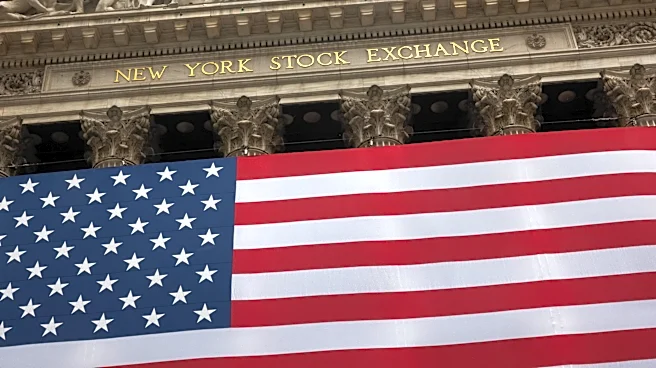
This integration marks a significant step in bridging traditional finance with decentralized finance (DeFi), potentially transforming how securities are managed and traded on Wall Street. By tokenizing assets on Solana, the DTCC aims to enhance collateral mobility, liquidity, and capital efficiency, offering continuous 24/7 availability for these assets. The DTCC, which processed $4.7 quadrillion in securities transactions in 2025 and holds $114 trillion in assets, is a critical backbone of the U.S. financial market. Its adoption of Solana validates the blockchain's capabilities for institutional-grade financial activity, particularly its speed and scalability. This development could lead to increased adoption of blockchain technology within mainstream finance, offering new avenues for trading and settlement and potentially reducing operational costs and settlement times for a vast array of financial instruments.
What's Next?
The operational deployment of tokenized assets on Solana is scheduled for the second half of 2027. Leading up to this, the DTCC will likely continue to develop and test the integration, ensuring seamless and secure conversion and management of securities on the blockchain. This move is expected to encourage other major financial institutions to explore or expand their use of blockchain technology for asset tokenization. The success of this integration could also spur further regulatory clarity and frameworks for digital assets in the U.S. financial system. Additionally, the increased liquidity and accessibility of tokenized assets may attract a broader range of institutional investors to the digital asset space, potentially driving innovation in financial products and services.
Beyond the Headlines
The DTCC's embrace of Solana for tokenization signifies a deeper shift in the financial industry towards a more interconnected and technologically advanced ecosystem. This move challenges the traditional silos between centralized financial systems and decentralized blockchain networks, suggesting a future where these two paradigms can coexist and complement each other. The ability to tokenize vast amounts of traditional securities on a public blockchain like Solana could democratize access to these assets, potentially lowering barriers to entry for various market participants. Furthermore, it raises questions about the long-term implications for market structure, regulatory oversight, and the role of intermediaries in a world where assets can be instantly transferred and settled on-chain. This development could also accelerate the adoption of other real-world asset (RWA) tokenization initiatives, paving the way for a more efficient and transparent global financial system.