



What's Happening?
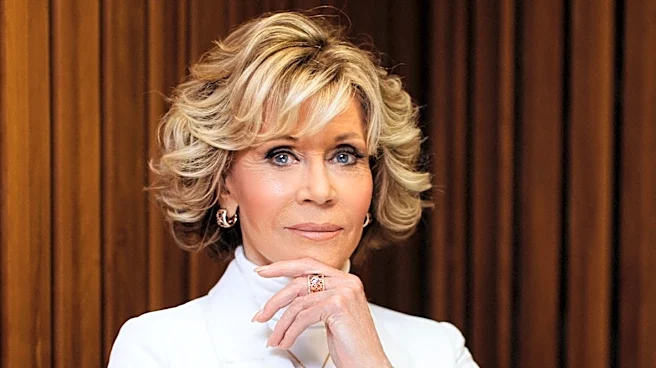
In early 1972, actress Jane Fonda declined the role of Chris MacNeil in William Friedkin's film 'The Exorcist,' based on a best-selling novel. Accounts vary regarding her exact reasoning, but Fonda herself stated in 2018 that she doesn't like horror movies,
explaining, 'There’s enough anxiety in the world.' Director William Friedkin, in his memoir 'The Friedkin Connection,' claimed Fonda sent a telegram calling the script 'capitalist rip-off bullshit.' However, author William Peter Blatty, in his book 'William Peter Blatty on The Exorcist,' reported that Fonda denied sending such a message and instead cited her disbelief in magic as the reason for her refusal. Despite the film's massive success and Ellen Burstyn's Oscar nomination for the role, Fonda expressed no regret.
Why It's Important?
This decision by Jane Fonda highlights the significant influence of an actor's personal preferences and beliefs on their career choices, even when faced with potentially iconic roles. Her rejection of 'The Exorcist' demonstrates that not all actors prioritize commercial success or critical acclaim above their comfort with a genre or subject matter. This event also illustrates the differing narratives that can emerge around a high-profile casting decision, with various parties offering their interpretations of the reasons behind it. For the film industry, it underscores how a single casting choice can alter the course of a production and, in this case, lead to another actress, Ellen Burstyn, achieving significant recognition for a role that might have gone to Fonda.
What's Next?
While this event is historical, it continues to be a point of discussion in film history and among fans of 'The Exorcist' and Jane Fonda. The differing accounts of her refusal contribute to the lore surrounding the film's production. For Fonda, her decision allowed her to focus on other projects and her political activism, which was a significant part of her public persona in the 1970s. The enduring legacy of 'The Exorcist' as a horror classic ensures that the 'what if' scenario of Fonda in the lead role remains a fascinating footnote in cinematic discussions, prompting ongoing speculation about how her involvement might have changed the film's reception or her own career trajectory.
Beyond the Headlines
Beyond the immediate casting decision, this story touches upon the broader intersection of art, personal conviction, and public perception. Jane Fonda's active political stance during the Vietnam War, which earned her the nickname 'Hanoi Jane,' suggests that her choices were often influenced by her social and political beliefs. Whether her rejection of 'The Exorcist' was purely a matter of taste or subtly intertwined with her anti-capitalist sentiments, as Friedkin suggested, it reflects a period where actors were increasingly vocal about their views. The film's themes of religious terror and the supernatural also raise questions about how actors engage with material that challenges their personal worldviews, adding a layer of philosophical depth to a seemingly straightforward casting decision.