






What's Happening?
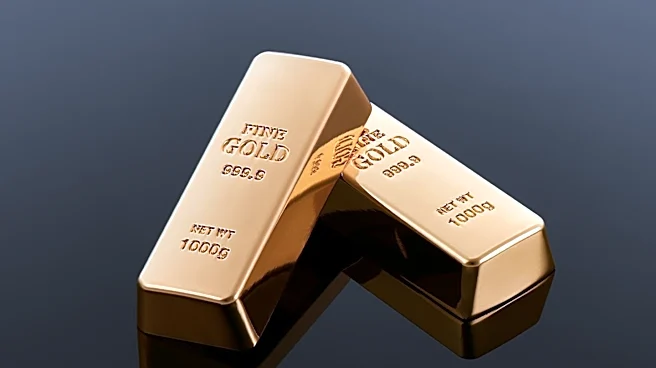
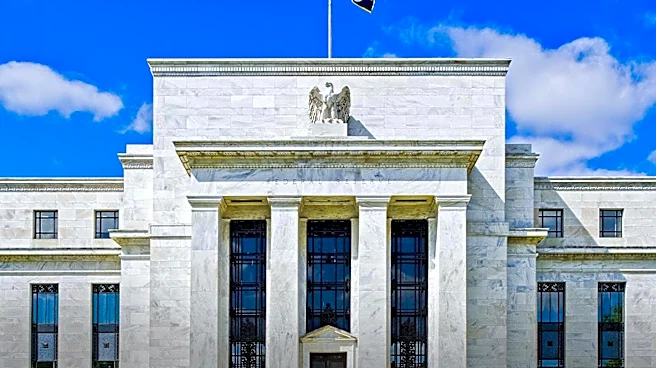
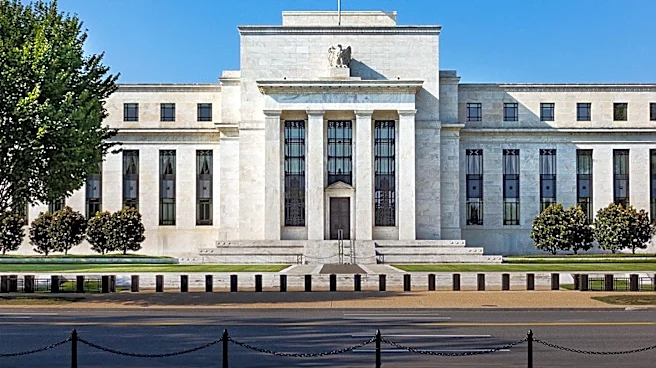
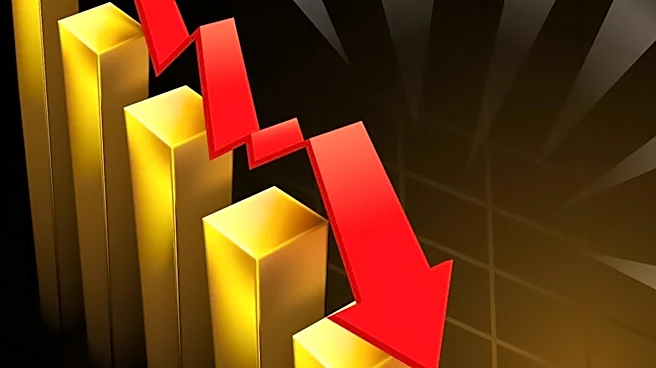
Gold prices are experiencing their sharpest quarterly decline in 13 years, driven by persistent inflation concerns and the Federal Reserve's hawkish monetary policy stance. The U.S. inflation rate remains significantly above the Fed's 2% target, prompting
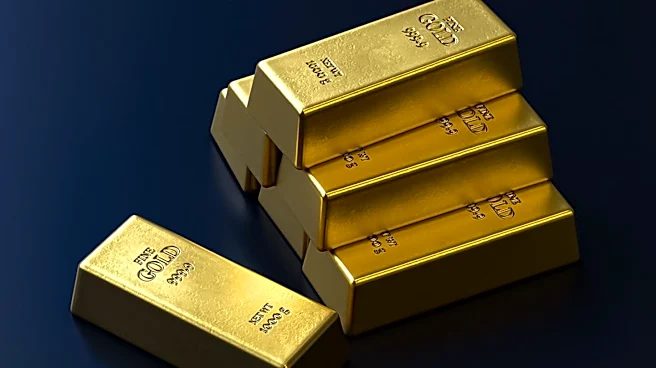
expectations of prolonged elevated interest rates and potential further rate hikes. As a result, gold, typically seen as a hedge against inflation, has been adversely affected due to its non-yielding nature. The market is currently pricing in a 67% chance of an interest rate hike in September, according to the CME FedWatch Tool. This anticipation has led to a decline in gold prices, with spot gold rising slightly by 0.3% to $4,027.03 per ounce, but still marking an 11.2% drop in June. The ongoing Middle East conflict has further fueled inflation concerns, impacting gold's performance.
Why It's Important?
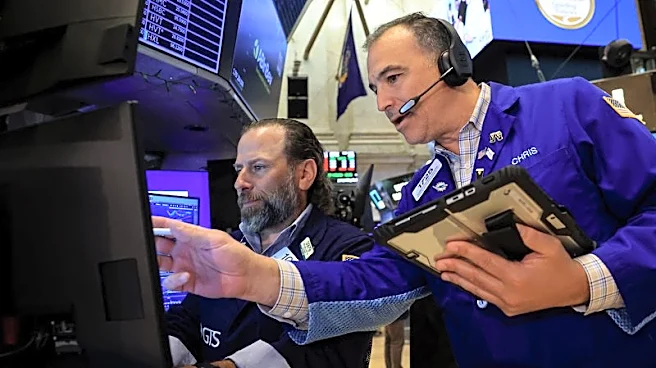
The decline in gold prices highlights the broader economic implications of the Federal Reserve's monetary policy decisions. As the Fed maintains a hawkish stance to combat inflation, the potential for higher interest rates could impact various sectors, including investments in non-yielding assets like gold. This situation underscores the delicate balance the Fed must maintain between controlling inflation and supporting economic growth. Investors and stakeholders in the financial markets are closely monitoring employment data and other economic indicators to gauge the Fed's future policy direction. The outcome of these decisions could have significant ramifications for the U.S. economy, influencing investment strategies and market stability.
What's Next?
Investors are awaiting key economic data, including the ADP employment report and U.S. nonfarm payrolls, to gain further insights into the Federal Reserve's monetary policy trajectory. These data points will be crucial in determining the likelihood of future interest rate hikes. Additionally, geopolitical developments, particularly in the Middle East, could continue to influence inflation expectations and, consequently, the Fed's policy decisions. Market participants will also be watching for any shifts in central bank strategies regarding U.S. dollar exposure and gold holdings, as indicated by recent surveys.