





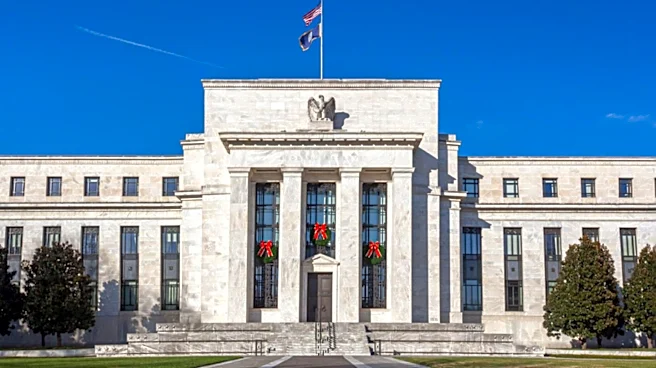

What's Happening?
Mortgage rates in the U.S. have decreased slightly, with the average 30-year mortgage rate dropping to 6.67% from 6.69% the previous week, according to Freddie Mac. This change comes as inflation shows signs of cooling and the job market weakens, reducing
the likelihood of the Federal Reserve raising interest rates soon. The Mortgage Bankers Association reported a 3.6% increase in mortgage loan applications week-over-week, indicating a potential rise in demand. The 10-year U.S. Treasury note yield, which influences mortgage rates, has been volatile due to geopolitical tensions and economic factors.
Why It's Important?
The slight decrease in mortgage rates offers a glimmer of hope for homebuyers who have been waiting for more affordable borrowing costs. However, the rates remain high compared to previous years, which could continue to challenge the housing market. The Federal Reserve's decisions on interest rates will be crucial in determining future mortgage rate trends. The current economic environment, marked by geopolitical tensions and inflation concerns, adds complexity to the Fed's policy decisions, impacting both the housing market and broader economic stability.
What's Next?
The Federal Reserve's upcoming meetings and economic data releases will be closely watched for indications of future interest rate policies. If inflation continues to cool and the job market remains weak, the Fed may opt to maintain current rates, potentially stabilizing mortgage rates. However, any changes in economic conditions or geopolitical developments could prompt a shift in policy, affecting mortgage rates and housing market dynamics.