









What's Happening?
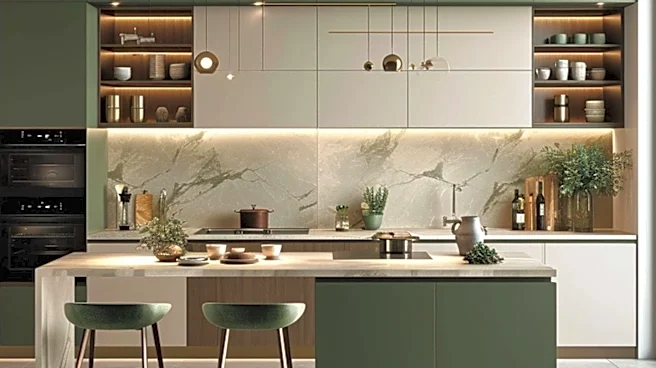
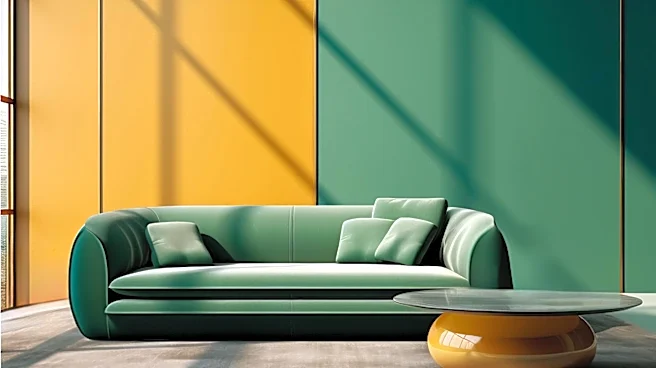
Interior designers often rely on the 60-30-10 rule to create balanced and visually appealing color schemes in rooms. This rule divides a room's color palette into three parts: 60% for the dominant color, 30% for the secondary color, and 10% for an accent
color. The dominant color typically covers large surfaces like walls and floors, while the secondary color is found in furniture and textiles, and the accent color appears in accessories and artwork. This approach helps designers achieve harmony and depth in a space, allowing for creativity within a structured framework.
Why It's Important?
The 60-30-10 rule is a valuable tool for both professional designers and homeowners seeking to enhance their living spaces. By providing a clear guideline for color distribution, it simplifies the process of creating aesthetically pleasing environments. This method can lead to more cohesive and inviting interiors, potentially increasing property value and improving occupant satisfaction. As design trends evolve, this rule remains a staple in the industry, demonstrating its effectiveness in achieving timeless and adaptable designs.